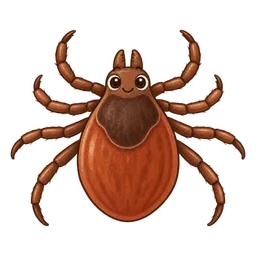
Ticks
Ixodidae (hard ticks): blacklegged/deer tick Ixodes scapularis, lone star tick Amblyomma americanum, American dog tick Dermacentor variabilis · Mosquitoes, Ticks & Chiggers
Ticks are small blood-feeding arachnids, not insects, and adults have eight legs. They wait on grass and low plants, grab people or pets walking by, then attach and feed slowly for days. The three common U.S. biters covered here can spread diseases such as Lyme disease (blacklegged tick), ehrlichiosis and red meat allergy (lone star tick), and Rocky Mountain spotted fever (American dog tick).
Look for: A flat, teardrop-shaped body with eight legs and no visible separate head. Lone star females have a single white dot on the back, dog ticks have whitish patterning, and blacklegged females are reddish-orange with black legs.
Quick facts
| Size | 2-5 mm |
|---|---|
| Legs | 8 |
| Usual colors | brown, orange |
| Where in the home | Garden |
| Active | All year |
| Peak | May, Jun, Jul, Aug |
| U.S. range | Blacklegged (deer) tick: widely distributed across the eastern U.S. Lone star tick: widely distributed in the Northeast, South and Midwest. American dog tick: widely distributed east of the Rocky Mountains, with limited areas in the West (a close relative, D. similis, lives west of the Rockies). |
| Bites or stings people | Yes |
Seasons are typical across much of the U.S. and vary by region.
Peak season Active Typical across much of the U.S.; varies by region.
Sources
Not sure this is your bug? Try the Bug Identifier or ask your local Cooperative Extension office.