Garden and Yard Pests Around the House
Your yard is where many household pests start. Standing water breeds mosquitoes, tall grass and leaf litter hide ticks and chiggers, and bare wood draws carpenter bees. Knowing the season for each one helps you prepare before it becomes a problem indoors.

Pests you may find in the garden
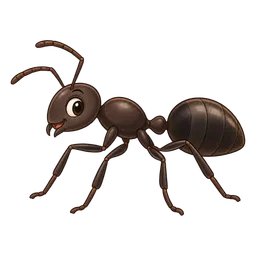 AntsFormicidaeWingless workers with a pinched waist and elbowed antennae, often marching in a single-file trail toward sweets or grease.
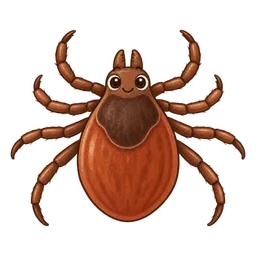 TicksIxodidae (hard ticks): blacklegged/deer tick Ixodes scapularis, lone star tick Amblyomma americanum, American dog tick Dermacentor variabilisA flat, teardrop-shaped body with eight legs and no visible separate head. Lone star females have a single white dot on the back, dog ticks have whitish patterning, and blacklegged females are reddish-orange with black legs.
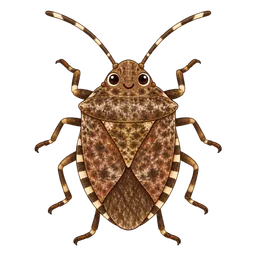 Brown Marmorated Stink BugHalyomorpha halysA shield-shaped, mottled brown bug about 5/8 inch long with white bands on its antennae and alternating light and dark bands along the edge of the abdomen.
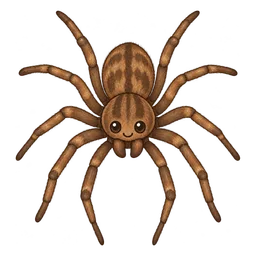 SpidersAraneae (common U.S. household spiders)Eight legs, two body sections (a front part bearing the legs and a rounded abdomen), and no wings or antennae. Insects have six legs and three body sections.
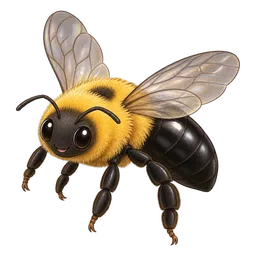 Carpenter BeesXylocopa virginica (eastern carpenter bee)A bumble-bee-sized bee whose upper abdomen is shiny, bare black instead of fuzzy, often hovering near a round 1/2-inch hole in wood with sawdust below.
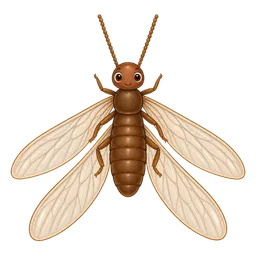 Subterranean TermitesReticulitermes flavipes (eastern subterranean termite); also Coptotermes formosanus (Formosan subterranean termite)Swarmers are small dark-brown to black insects with straight beaded antennae, a thick waist and four equal-length wings that break off easily; workers are soft and creamy white.
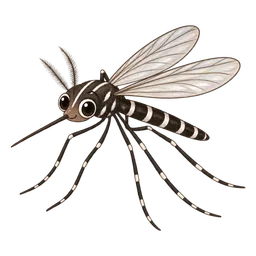 MosquitoesCulicidae (mainly Culex, Aedes, Anopheles spp. in the U.S.)A slender fly with long, thin legs and a long, needle-like beak that lands on skin to feed. The wings are covered in tiny scales.
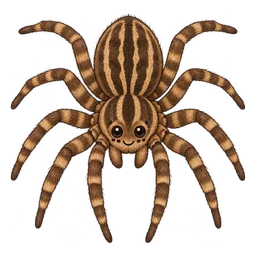 Wolf SpidersLycosidae (e.g. Hogna carolinensis, Tigrosa aspersa)A large, hairy brown-to-gray spider that runs along floors. Its legs often have lighter bands, and its eyes shine green in a flashlight beam at night. Females may carry spiderlings on their backs.
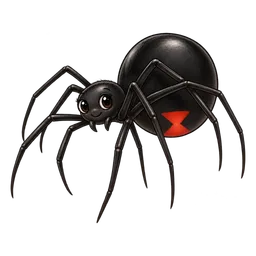 Black Widow SpidersLatrodectus spp. (L. mactans, L. variolus, L. hesperus)Adult female: a shiny jet-black spider with a large, round abdomen and a red-to-orange hourglass mark on the underside. Young spiders and males are smaller and tan or gray with light stripes.
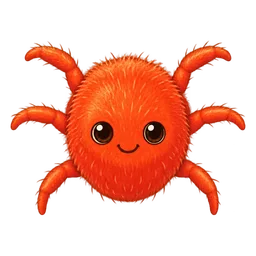 ChiggersTrombiculidae (larval mites; e.g. Eutrombicula alfreddugesi)Usually seen only as clusters of very itchy red bumps around the ankles, waistband or other tight-clothing spots that appear a few hours after being outdoors. The mite itself is a reddish-orange speck barely visible to the eye.
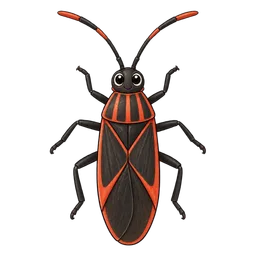 Boxelder BugBoisea trivittataA flat black bug about 1/2 inch long with three red-orange stripes behind the head and red-orange edges on its wings.
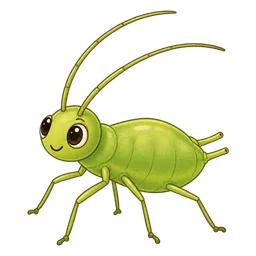 AphidsAphidoidea (many species)Pear-shaped, usually green, with two tiny tubes sticking out the back end, often packed together on the newest growth.