How to Get Rid of Mosquitoes in Your Yard
Quick Answer
To get rid of mosquitoes in your yard, take away the standing water they breed in. Once a week, empty and scrub, turn over, cover or throw out anything that holds water, from buckets and tires to plant saucers and birdbaths. Clean clogged gutters, cover rain barrels, and treat water you cannot drain with a larvicide used as the label directs. Keep window and door screens tight, and contact your local mosquito control program about larger problems.
On this page
- How do you get rid of mosquitoes in your yard, step by step?
- Why does standing water matter so much?
- Where do mosquitoes breed in a yard?
- What can you do about water you cannot dump?
- Do yard sprays, foggers, misting systems and zappers work?
- How do you keep mosquitoes out of the house and off you?
- When does local mosquito control help, and when should you call a professional?
- Frequently Asked Questions
- Our Take
- Sources
Key Takeaways
- Mosquitoes grow from egg to biting adult in water in about 7 to 10 days, so a weekly cleanup breaks the cycle.
- Small containers matter: tires, buckets, plant saucers, toys, birdbaths, clogged gutters and recycling bins all breed mosquitoes.
- Some mosquito eggs stick to container walls and survive dry for months, so scrub containers instead of just tipping them out.
- Yard sprays give only short relief, CDC does not recommend backyard misting systems, and bug zappers kill the insects that eat mosquitoes.
- Your county or city mosquito control program tracks and treats mosquitoes across the area; report trouble spots to it.
How do you get rid of mosquitoes in your yard, step by step?
The lasting fix is to stop your yard from producing mosquitoes. CDC's advice for the outdoors starts with one weekly habit: once a week, empty and scrub, turn over, cover or throw out items that hold water, such as tires, buckets, planters, toys, pools, birdbaths, flowerpot saucers and trash containers [1]. Penn State Extension notes that many mosquito problems can be traced to backyard containers filled with water [9].
- Walk the yard once a week. Look for anything holding water, including a tarp, a wheelbarrow or a toy.
- Dump and scrub. Empty the water and scrub the inside walls of containers you keep, so eggs stuck above the waterline go too.
- Flip, drill or toss. Turn over kiddie pools and wheelbarrows, drill drain holes in the bottoms of recycling bins left outdoors, and get rid of old tires.
- Cover what you store. Put tight lids on rain barrels and other water storage, or cover open tops with mesh too fine for a mosquito.
- Fix the slow spots. Clean clogged gutters, fill tree holes, and avoid overwatering the lawn and beds.
- Treat what you cannot drain. Use a larvicide labeled for the site in ponds, rain barrels or other water you cannot dump or cover.
One weekly walk to dump, scrub and cover standing water does more against yard mosquitoes than any spray.
Mosquito season is typically June through October across much of the U.S., according to CDC's West Nile virus page, and the season varies by region [7]. Start the weekly routine as soon as the weather warms and keep it up until the first hard frost.
Why does standing water matter so much?
Every mosquito starts life in water. Mosquitoes pass through four stages: egg, larva, pupa and adult, and the larvae (often called "wigglers") and pupae both live in the water [2]. CDC says an egg takes 7 to 10 days to become an adult, and UC IPM adds that in summer the whole cycle can take a week or less, depending on water temperature [8]. That timing is why the cleanup is weekly: dumping water every 7 days kills the larvae before they can fly.
Aedes mosquitoes, including the Asian tiger mosquito, are the container breeders most yards produce, and their biology explains the cleanup routine:
| Aedes fact | What it means for your yard |
|---|---|
| Eggs are laid on the inner walls of containers, just above the waterline | Look inside buckets, tires, planters, toys and saucers, not just at open water |
| Eggs survive drying for up to 8 months, then hatch when flooded | An empty container can still hold eggs; scrub it or store it upside down |
| Egg to adult takes about 7 to 10 days | Dump and scrub standing water at least once a week |
| Ae. aegypti live indoors and outdoors; Ae. albopictus outdoors | Check indoor plant saucers and vases too |
Details from CDC's Aedes life cycle page [2]. Because Aedes eggs cling to container walls and survive drying for up to 8 months, scrub containers instead of just tipping them out.
Your yard's water mostly feeds your yard's mosquitoes. CDC says the Aedes species fly only a few blocks in their lifetime, and Penn State says most mosquitoes stay within half a mile of where they bred, although some fly many miles. So a clean yard really does cut the number of bites, and a neighbor's neglected pool can undo some of the work.
Where do mosquitoes breed in a yard?
Anywhere water sits for a week. The list is longer than most people expect, so it helps to walk the yard in a loop.
| Spot | What to do | Source |
|---|---|---|
| Buckets, planters, toys, saucers, trash cans | empty and scrub weekly, or store upside down | CDC |
| Birdbaths and pet dishes | change the water every week | UC IPM |
| Old tires | get rid of them or keep them dry | Penn State, CDC |
| Rain barrels, cisterns | tight lid, or mesh smaller than a mosquito | CDC |
| Roof gutters | clear leaves and debris at least once a year | UC IPM, Penn State |
| Recycling bins | drill drain holes in the bottom | Penn State |
| Kiddie pools, wheelbarrows | turn over when not in use | Penn State |
| Tree holes | fill with sand or mortar | UC IPM |
| Lawn and beds | avoid overwatering that leaves puddles | UC IPM |
| Septic tank | repair cracks; cover vents and pipes with fine mesh | CDC |
Sources: CDC [1], UC IPM [8] and Penn State Extension [9], all retrieved 2026-11-12. Our garden pest guide covers other insects you may find while you are out there.
What can you do about water you cannot dump?
Ponds, water gardens and rain barrels you want to keep need a different approach. UC IPM suggests removing excess vegetation from ponds, stocking them with mosquito-eating fish, or using products containing Bacillus thuringiensis (Bt), a bacterial larvicide [8]. Mosquitofish work best in man-made water that does not connect to natural waters, and UC IPM warns that they should never be released into streams, ponds or lakes.
CDC says larvicides are for water that will not be used for drinking and cannot be covered or dumped out, and to always follow label instructions [1]. Pick an EPA-registered larvicide labeled for the kind of water you are treating (a rain barrel, a pond with fish, a birdbath), and use only the amount the label states. Read and follow the label. The label is the law. Keep children and pets away from the product and the treated water as the label directs.
Do yard sprays, foggers, misting systems and zappers work?
They help much less than people hope. UC IPM says outdoor sprays can temporarily reduce the number of adult mosquitoes but have no lasting effect, and that control should focus on larvae and standing water [8]. A sprayed yard fills up again as new adults hatch from the water nearby.
- Spot treatments for adults. CDC says an outdoor adulticide can be used where adult mosquitoes rest, such as under patio furniture or in a carport or garage, following label instructions. If you use one, choose an EPA-registered insecticide labeled for outdoor mosquitoes. Read and follow the label. The label is the law. Keep children and pets out of the area until the label says it is safe, and avoid spraying where bees and butterflies are feeding.
- Foggers. Penn State's advice is that if you must fog, do it in the evening when mosquitoes are active and follow all directions on the label [9].
- Backyard misting systems. CDC does not recommend misting systems for homeowners or residential areas. It notes that they spray on a timer without mosquito surveillance, can harm bees and butterflies, and may expose people and pets [4].
- Bug zappers. UC IPM calls electric zappers counterproductive because many of the insects they kill are ones that prey on mosquitoes.
- Ultrasonic devices. UC IPM lists them as ineffective, and Penn State says they have not been proven to prevent mosquito bites.
How do you keep mosquitoes out of the house and off you?
While you work on the yard, keep mosquitoes outside. CDC recommends installing and repairing window and door screens, keeping doors (including garage doors) closed instead of propped open, using air conditioning when you can, and emptying indoor water holders such as vases and saucers each week [1]. Penn State says to make sure screens are "bug tight." A whine in the bedroom at night often points to a torn screen or an open door.
Outdoors, plan around the times mosquitoes are busiest. Penn State notes that mosquitoes are most active at dawn, dusk and early evening, and suggests long sleeves and long pants then; UC IPM adds that some species bite during the day. For personal protection, CDC's advice is simple: use an EPA-registered insect repellent and always follow the label instructions [5].
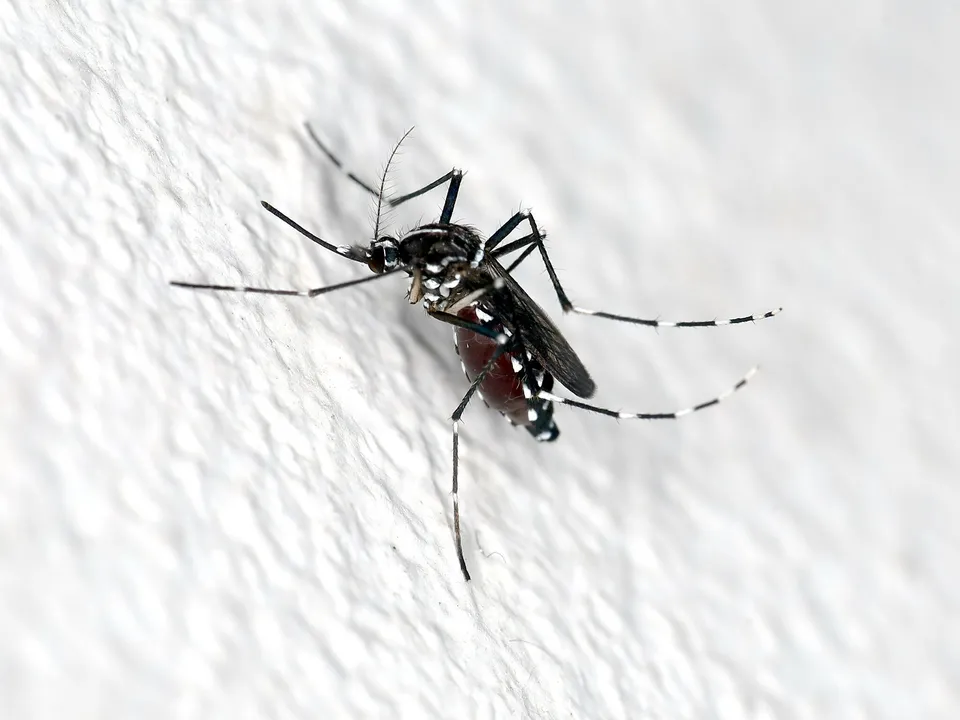
Not every long-legged fly is a mosquito. UC IPM notes that non-biting midges and large crane flies (sometimes called "mosquito hawks") are often mistaken for mosquitoes, and crane flies do not actually eat mosquitoes. Small flies hovering over houseplants are more likely fungus gnats; see how to get rid of gnats or the mosquito profile.
When does local mosquito control help, and when should you call a professional?
Mosquito control is mostly a local government job. CDC explains that local governments and mosquito control districts track how many mosquitoes there are and which kinds, find standing water, treat it with larvicides, and apply adulticides by backpack, truck or airplane when surveillance shows rising mosquito numbers or virus activity [3]. That work can reach water one household cannot, such as ditches, storm drains and abandoned pools.
Contact your local program when:
- Mosquitoes stay heavy after two weeks of weekly cleanup in your yard. The source may be off your property. UC IPM tells homeowners to contact their county mosquito and vector control agency for local management information, and Penn State suggests reporting trouble spots to municipal authorities.
- You find water you cannot fix, such as a clogged storm drain, a roadside ditch or a neighbor's abandoned pool.
- You want to know what is sprayed in your area or when. Your local program or health department can tell you.
A licensed pest professional is worth calling if mosquitoes keep showing up indoors after you have screened, closed doors and emptied containers; CDC lists hiring a pest control professional as an option for treating indoor areas.
Most mosquito bites only itch. CDC says to see a healthcare provider if bite symptoms get worse or a bite looks infected (red, warm, or with a red streak spreading from it) [6], and to talk to a healthcare provider if you think you or a loved one might have West Nile virus. Our bites section and the bite identifier help you sort out what bit you.
Frequently Asked Questions
How long does it take for mosquitoes to grow in standing water?
About 7 to 10 days from egg to adult, according to CDC [2], and a week or less in warm summer water, according to UC IPM. That is why emptying containers once a week works.
How far do mosquitoes fly from where they breed?
CDC says the Aedes mosquitoes common in yards fly only a few blocks in their lifetime [2]. Penn State says most mosquitoes stay within half a mile of their breeding site, though some species fly many miles. Most of your bites come from water close to home.
Are crane flies giant mosquitoes?
No. UC IPM says large crane flies are often mistaken for mosquitoes and, despite the nickname "mosquito hawk" do not eat mosquitoes [8]. The bug identifier can help you check.
Does a bug zapper get rid of mosquitoes?
UC IPM calls electric bug zappers counterproductive, because many of the insects they kill are predators of mosquitoes [8].
Our Take
We think most yard mosquito problems are solved with a bucket brush, not a sprayer. Every source we relied on, from CDC to UC IPM and Penn State, puts standing water first, and the 7 to 10 day life cycle explains why: a weekly dump-and-scrub routine kills the next generation before it flies. Sprays and misting systems feel like action, but they wear off while the water keeps producing new adults, and CDC does not recommend backyard misting at all. Where we would spend energy is on the spots people overlook, such as clogged gutters, recycling bins and saucers, and on calling the local mosquito control program when the source is a ditch or a neglected pool next door.
Sources
- Mosquito Control at Home. Centers for Disease Control and Prevention, 2024.
- Life Cycle of Aedes Mosquitoes. Centers for Disease Control and Prevention, 2024.
- What Mosquito Control Programs Do. Centers for Disease Control and Prevention, 2026.
- Misting Systems for Mosquitoes. Centers for Disease Control and Prevention, 2024.
- Preventing Mosquito Bites. Centers for Disease Control and Prevention, 2024.
- About Mosquito Bites. Centers for Disease Control and Prevention, 2024.
- About West Nile. Centers for Disease Control and Prevention, 2026.
- Mosquitoes: Pest Notes for Home and Landscape. UC Statewide IPM Program, 2020.
- Mosquito Biology and Control. Penn State Extension, 2016.
Pest activity and species vary by region. If you are unsure what you have, your local Cooperative Extension office can identify it. Always read and follow pesticide labels. Spotted an error? Tell us.
Keep Reading
How to Get Rid of Stink Bugs Indoors
Get rid of stink bugs indoors without the smell: vacuum or drop them in soapy water, never crush them, and seal cracks before fall, when they move inside.
How to Get Rid of Silverfish
Get rid of silverfish by drying out damp rooms, fixing leaks, clearing old paper and boxes, and catching them in simple jar traps. See when dusts or a pro help.
How to Get Rid of Drain Flies
Get rid of drain flies by finding the breeding drain with a cup test, then scrubbing out the slimy film. Boiling water and bleach fail; here is what works.
How to Get Rid of Fleas in the House
Get rid of fleas in the house: have your vet treat every pet, vacuum daily, wash pet bedding, treat flea hot spots and keep at it for weeks while cocoons hatch.

How to Get Rid of Termites: DIY vs Professional
Termites in your house need a licensed pro, but you can spot the signs, fix moisture and wood-to-soil contact, and choose a company wisely. Here is what helps.
How to Get Rid of Carpenter Bees
Get rid of carpenter bees by painting bare wood, filling old holes in fall, and treating only active tunnels if needed. Males can't sting, and bees pollinate.