How to Get Rid of Fleas in the House
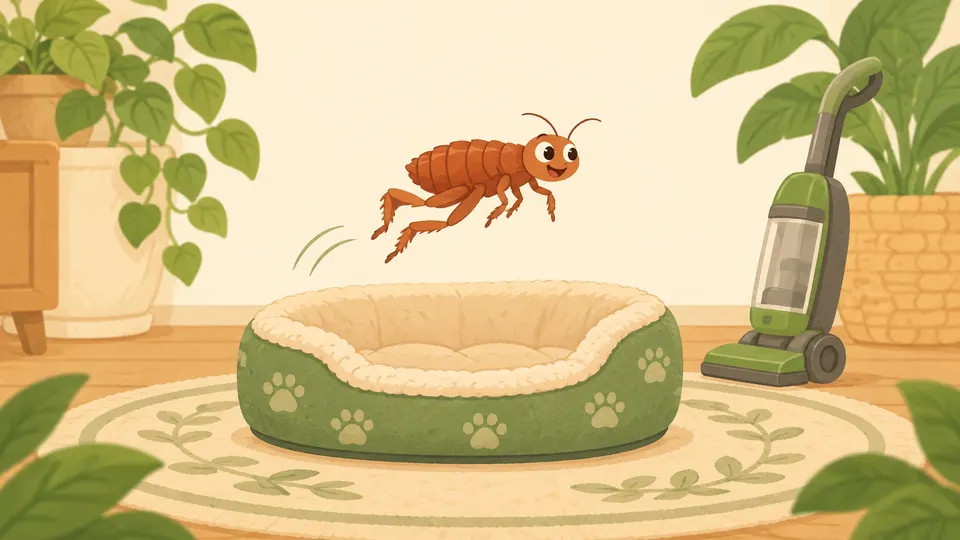
Quick Answer
To get rid of fleas in the house, ask your veterinarian to treat every dog and cat at the same time, then vacuum carpets, rugs and furniture daily or every other day, and wash pet bedding in hot, soapy water each week. Treat only the spots where pets rest. Expect to see a few new fleas for several weeks, because cocoons in the carpet keep hatching.
On this page
- How do you get rid of fleas in the house, step by step?
- Why do fleas keep coming back after you treat?
- How should you vacuum and clean to get rid of fleas?
- How do you treat your pet for fleas?
- Should you use a flea spray or a flea bomb in the house?
- Do you need to treat the yard for fleas?
- When should you call a pest professional or a doctor?
- Frequently Asked Questions
- Our Take
- Sources
Key Takeaways
- Most fleas in a home live on the pet; eggs fall off into carpets, bedding and furniture, so the pet and the house need attention together.
- Pet treatment is a job for your veterinarian. Never put carpet or yard products on a pet.
- Vacuuming is the most important home step: it removes eggs and larvae and pushes adults out of their cocoons.
- Flea cocoons resist insecticides, so new fleas can keep appearing for a few weeks after treatment. That is normal.
- Flea bombs (total release foggers) are not recommended for fleas; call a licensed pest professional if fleas persist after about four weeks.
How do you get rid of fleas in the house, step by step?
Fleas are beaten with a steady routine, not one big spray. University of Kentucky entomologist Michael Potter writes that treating the pet is essential, because adult fleas spend most of their time on the animal, not in the carpet [2]. The house matters too, because that is where eggs, larvae and cocoons build up. Work through these steps in order:
- Confirm it is fleas. Look for tiny, reddish-brown, wingless insects that jump, and for dark, pepper-like specks (flea dirt) in your pet's fur. Our guide to what a flea looks like shows the signs.
- Call your veterinarian. Ask how to treat every dog and cat in the home on the same day. Untreated pets keep the cycle going.
- Clear the floors. Kentucky's guide calls clearing floors, under beds and closets "essential" so cleaning and any treatment can reach everywhere [2].
- Wash and vacuum. Wash pet bedding and throw rugs, then vacuum carpets, rugs, upholstered furniture, and the cracks along baseboards and cabinets.
- Keep vacuuming. UC IPM advises vacuuming daily or every other day while you are fighting fleas [1].
- Treat hot spots only if needed. If fleas are still building up, a home flea product with an insect growth regulator can be applied to the spots where pets rest (see below).
- Check the yard and crawl spaces. Shady pet resting spots outdoors can keep reinfesting the house.
Treat every pet and the home at the same time; doing only one lets fleas bounce right back.
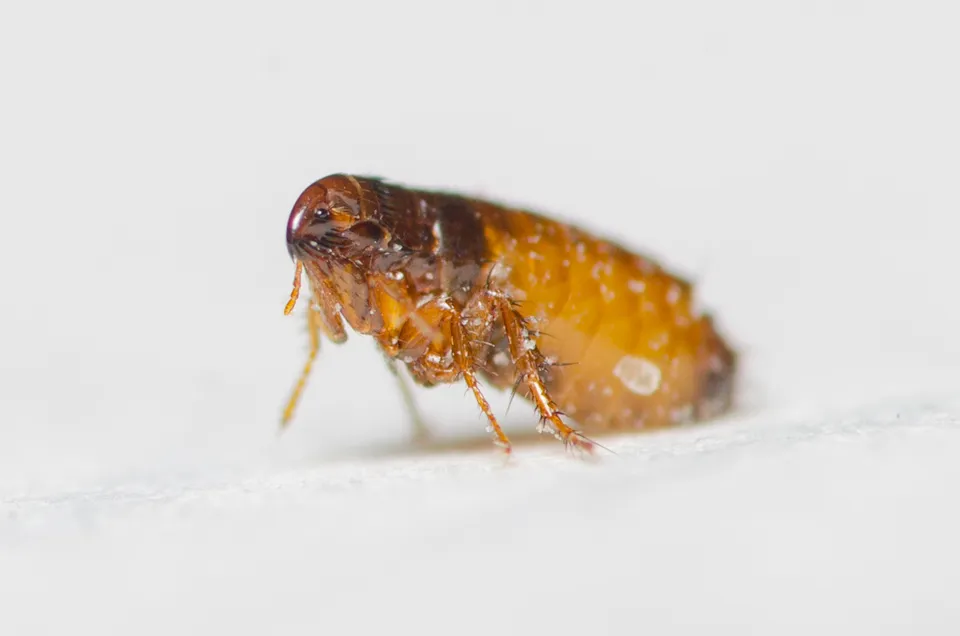
Why do fleas keep coming back after you treat?
Fleas come back because most of the population is not adult fleas. UC IPM explains that eggs hatch in 2 to 5 days, larvae feed for 8 to 15 days, and the whole cycle can take about 18 days at normal room temperature [1]. The larvae live deep at the base of carpet fibers, and the pupae sit inside silk cocoons.
Those cocoons are the problem. Kentucky's guide says pupae stay in their cocoons for 1 to 4 weeks, longer when conditions are poor, and that the cocoons resist insecticides [2]. UC IPM adds that in cool conditions, an adult can wait inside a cocoon for up to 12 months [1]. That is why people sometimes move into a home that has been empty for months and get bitten right away.
The good news is that vacuuming wakes them up. Vacuuming "stimulates fleas to emerge sooner from their insecticide-resistant cocoons," and it removes many eggs, larvae and pupae [2]. UC IPM calls vacuuming "very effective in killing larvae in the carpet" [1].
Seeing a few new fleas for two to four weeks after treatment usually means cocoons are hatching, not that the treatment failed.
How should you vacuum and clean to get rid of fleas?
Cleaning is the part of flea control you fully control, and it costs little. Focus on the places your pet sleeps and lies:
| Where | What to do | How often |
|---|---|---|
| Carpets and rugs | Vacuum slowly, including edges and under furniture | Daily or every other day |
| Sofa and chair cushions | Vacuum on top, underneath and in the crevices | Daily or every other day |
| Pet bedding and throw rugs | Wash in hot, soapy water | At least weekly |
| Baseboards and cabinet cracks | Use the crevice tool | Each time you vacuum |
| Hard floors (wood, tile) | Vacuum; these usually need nothing more | Each time you vacuum |
| The vacuum bag or canister | Seal the contents in a garbage bag and take it outside | Each time |
Frequency and laundry advice from UC IPM; hard floors and bag disposal from the University of Kentucky. Kentucky's guide says hard floors such as hardwood, tile and concrete generally need only vacuuming [2]. UC IPM also recommends a metal flea comb, which removes adult fleas from the pet and shows you whether fleas are going down over time, and it suggests cleaning used carpets or furniture before you bring them indoors [1].
A light-and-glue-board flea trap can help you monitor progress, but Kentucky notes that traps will not get rid of an infestation on their own [2]. Start in the living room and bedroom, where pets usually rest.
How do you treat your pet for fleas?
Ask your veterinarian. Pet flea treatment depends on the animal's species, age, weight and health, and some products that are fine for dogs can be dangerous for cats. Kentucky's guide says it "is usually prudent to consult a veterinarian for the most appropriate treatment for your pet," and warns never to use products meant for carpets or yards on pets [2]. UC IPM also recommends asking your veterinarian to help choose a product, and to start before flea numbers build up [1].
Three things to raise with your vet: treat every dog and cat in the household, not just the one scratching; ask whether your area calls for seasonal or year-round prevention; and mention it if a product that used to work no longer seems to, since Kentucky notes fleas can become resistant.
Should you use a flea spray or a flea bomb in the house?
A targeted spray can help in a heavy infestation; a flea bomb usually does not. If vacuuming and pet care are not keeping up, UC IPM says home flea products containing an insect growth regulator (IGR) such as methoprene or pyriproxyfen work best, because IGRs stop eggs and larvae from developing. Products without an IGR "often fail to control flea larvae," which live at the base of carpet fibers [1]. Treat only carpets, rugs, cushions and the areas under and behind furniture where pets rest, then vacuum again once it dries.
Flea bombs are a different story. Kentucky's guide states that total release foggers are "NOT recommended for fleas": the mist rises into the air and misses the hidden places where larvae develop, and some ingredients are flammable near an open flame such as a pilot light [2]. UC IPM agrees that foggers do not give the coverage of a direct application [1].
Read and follow the label. The label is the law. Use only EPA-registered products labeled for indoor flea control, keep children and pets off treated surfaces until they are completely dry, remove pet food and water bowls and cover fish tanks first, and store products in their original containers out of reach of children and pets. Do not repeat a treatment early; Kentucky advises waiting about four weeks and vacuuming in the meantime.
Do you need to treat the yard for fleas?
Only the shady spots where pets rest. UC IPM says outdoor fleas develop in shaded, protected places such as animal enclosures, crawl spaces where stray or wild animals sleep, and plants next to buildings; immature fleas are unlikely to survive in direct sun. Treating the whole lawn is seldom necessary [1].
Try the white sock test first: pull white socks up to your knees and walk through pet resting areas. If fleas are there, they jump onto the socks, where they are easy to see. Then trim low-hanging plants to let sun into pet sleeping areas, and keep wildlife from settling under the deck or porch. Kentucky's guide notes that raccoons, opossums, skunks and squirrels living in attics, chimneys or under the house can bring fleas even into homes with no pets, and that those animals should be removed by a wildlife or pest professional before the home is treated [2].
If an outdoor product is needed, apply it only to those resting spots. Read and follow the label. The label is the law. Keep children and pets off treated areas until the product has dried, as the label directs.
When should you call a pest professional or a doctor?
Most flea problems end with veterinary care for the pets plus a few weeks of steady vacuuming. Call a licensed pest professional when:
- Adult fleas persist after about four weeks of pet treatment and vacuuming. Kentucky says retreating the home or pets may be needed at that point [2].
- Wild animals are living in the attic, chimney or crawl space. They need to be removed before treatment works.
- You do not want to apply products yourself, or you have young children or other health concerns in the home. Kentucky notes that homeowners who prefer not to treat can hire a pest control firm.
- You are not sure the biters are fleas. Bed bugs also bite at night; compare them in our bed bug identification guide or try the bug identifier tool.
Fleas can sometimes spread germs that cause flea-borne typhus, plague or cat scratch disease, and young children are at higher risk of flea tapeworm [3]. CDC advises seeing a healthcare provider if fever, chills, body aches, headache, nausea or a rash develop after contact with fleas, and telling them about the flea or animal contact [4]. For bite questions, see our bites guides.
If fever or a rash follows flea contact, see a healthcare provider and mention the fleas.
Frequently Asked Questions
How long does it take to get rid of fleas in the house?
Plan on several weeks. The flea life cycle takes about 18 days at room temperature, and cocoons can hold fleas for 1 to 4 weeks or longer [1]. Kentucky's guide says to expect some fleas for a few weeks or longer after treatment and that severe infestations can take several weeks to clear.
Can fleas live in a house with no pets?
Yes, for a while. Adults can wait in their cocoons for months in an empty or cool home, then jump onto the first person who walks by. Wild animals such as raccoons, opossums or squirrels living in or under the house can also keep bringing fleas in [2].
Is there a flea season?
Fleas are on pets throughout the year, but UC IPM says numbers rise sharply in spring and early summer [1]. Timing varies by region, so ask your veterinarian whether your pets need prevention seasonally or all year. See our flea profile for more.
Our Take
We think the most common flea mistake is treating fleas as a one-day job. A flea bomb or a single spray feels decisive, but the extension guidance we relied on is clear that cocoons shrug off insecticides and keep hatching for weeks. What actually ends an infestation is boring: get every pet treated through your veterinarian on the same day, vacuum the places pets rest almost every day for two weeks, wash their bedding, and resist the urge to retreat early. If adult fleas are still around after a month of that, it is time for a licensed pest professional, and a check for wildlife under the house.
Sources
- Pest Notes: Fleas. UC Statewide IPM Program, 2010.
- Flea Control and Prevention (ENTFACT-602). University of Kentucky Entomology, 2026.
- About Fleas. Centers for Disease Control and Prevention.
- About Flea-borne Typhus. Centers for Disease Control and Prevention.
Pest activity and species vary by region. If you are unsure what you have, your local Cooperative Extension office can identify it. Always read and follow pesticide labels. Spotted an error? Tell us.
Keep Reading

How to Get Rid of Mosquitoes in Your Yard
Get rid of yard mosquitoes at the source: dump standing water weekly, clean gutters, cover rain barrels, treat ponds, keep screens tight and call local control.
How to Get Rid of Stink Bugs Indoors
Get rid of stink bugs indoors without the smell: vacuum or drop them in soapy water, never crush them, and seal cracks before fall, when they move inside.
How to Get Rid of Silverfish
Get rid of silverfish by drying out damp rooms, fixing leaks, clearing old paper and boxes, and catching them in simple jar traps. See when dusts or a pro help.
How to Get Rid of Drain Flies
Get rid of drain flies by finding the breeding drain with a cup test, then scrubbing out the slimy film. Boiling water and bleach fail; here is what works.

How to Get Rid of Termites: DIY vs Professional
Termites in your house need a licensed pro, but you can spot the signs, fix moisture and wood-to-soil contact, and choose a company wisely. Here is what helps.
How to Get Rid of Carpenter Bees
Get rid of carpenter bees by painting bare wood, filling old holes in fall, and treating only active tunnels if needed. Males can't sting, and bees pollinate.