What Does a Bed Bug Look Like? Every Life Stage
Quick Answer
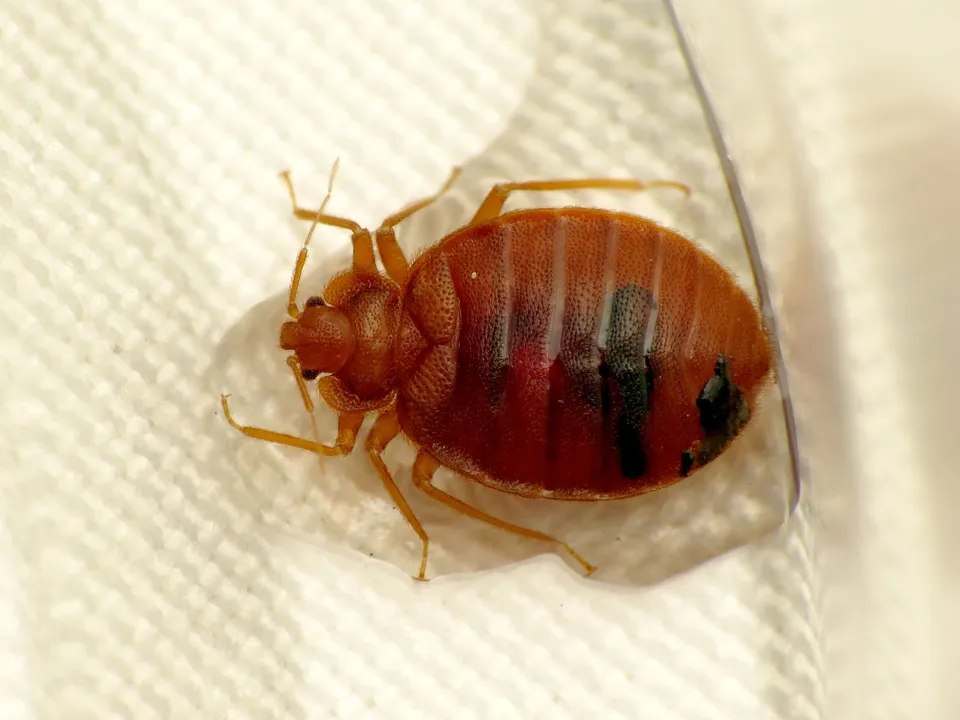
An adult bed bug looks like a flat, oval, wingless bug about the size of an apple seed, 5 to 7 mm long. It is brown before feeding and turns reddish-brown and swollen after a meal. Young bed bugs (nymphs) are smaller and pale, almost see-through until they feed, and eggs are pearly white specks about 1 mm long, usually tucked into mattress seams.
On this page
Key Takeaways
- Adults are about the size of an apple seed (5 to 7 mm), flat, oval, brown to reddish-brown and have 6 legs.
- Nymphs go through 5 stages, from about 1.5 to 4.5 mm, and look pale or straw-colored until they feed.
- Eggs are about 1 mm, pearl-white and sticky, so they are easy to miss without a flashlight and magnifier.
- Carpet beetles, fleas, bat bugs and ticks are the usual lookalikes; shape and movement tell most of them apart.
- Finding droppings, shed skins or eggs near the bed confirms bed bugs better than bites do.
What does an adult bed bug look like?
An adult bed bug is about the size of an apple seed, roughly 5 to 7 mm (3/16 to 1/4 inch) long [1]. EPA describes unfed adults as brown, flat and oval. After a blood meal they look balloon-like, more elongated and reddish-brown. The University of Kentucky puts it simply: the color of an apple seed, and closer to the size of a lentil [4].
Look for these features with a flashlight and, if you have one, a magnifier:
- Shape: flat and oval when unfed, which lets adults slip into cracks about as thin as a credit card [2].
- Color: brown to reddish-brown; UC IPM calls it rusty red or mahogany [3].
- Wings: none that work. Adults have only small wing pads, so a bed bug cannot fly.
- Legs and antennae: 6 legs, and antennae with four parts.
- Smell: EPA says bed bugs give off a musty, sweetish odor from glands on the underside of the body, though Kentucky notes the odor is rarely noticeable and should not be relied on.
A flat, oval, reddish-brown bug about the size of an apple seed, found in a mattress seam, is the classic sign of an adult bed bug. Compare the photo with any bug you catch, and check our bed bug profile for range and season facts.
What do bed bug eggs and nymphs look like?
Bed bug eggs are pinhead-sized and pearl-white, about 1 mm long, and after about five days they show an eye spot [1]. Kentucky adds that eggs are sticky when laid, so they stay glued to fabric or wood, and they are hard to see without magnification, especially on light materials.
Nymphs (young bed bugs) look like small, pale adults. EPA describes them as translucent or whitish-yellow and says an unfed nymph can be nearly invisible to the naked eye. Newly hatched nymphs are straw-colored and no bigger than a pinhead [4]. A nymph that has just fed is much easier to spot, because the blood inside shows through its pale body.
There are five nymph stages, and each one needs at least one blood meal before it can molt to the next [3]. UC IPM says going from egg to adult takes about five weeks to four months depending on temperature and food, and adults may live a year or more. Each molt leaves behind a light-brown shed skin, which is one of the easiest clues to find.
How big is a bed bug compared with other small bugs?
Size is one of the fastest ways to sort a bed bug from its lookalikes. Every bug in the chart below is drawn on the same millimeter scale, so you can compare them directly.
| Life stage or bug | Typical size | Color | Source |
|---|---|---|---|
| Bed bug egg | about 1 mm | pearl-white, eye spot after about 5 days | EPA |
| First-stage nymph | about 1.5 mm | translucent, whitish-yellow or straw-colored | EPA, Kentucky |
| Fifth-stage nymph | about 4.5 mm | pale until fed, then reddish | EPA |
| Adult bed bug | 5 to 7 mm | brown, reddish-brown after feeding | EPA |
| Adult cat flea | up to about 3 mm (1/8 inch) | reddish-brown | UC IPM |
| Varied carpet beetle adult | 2 to 3.5 mm | mottled colored scales | Penn State |
What bugs look like bed bugs?
The bugs most often mistaken for bed bugs are carpet beetles, fleas, bat bugs and ticks; Kentucky also lists cockroaches [4]. EPA warns that carpet beetles in particular are easily mistaken for bed bugs [2].
| Lookalike | How to tell it apart from a bed bug |
|---|---|
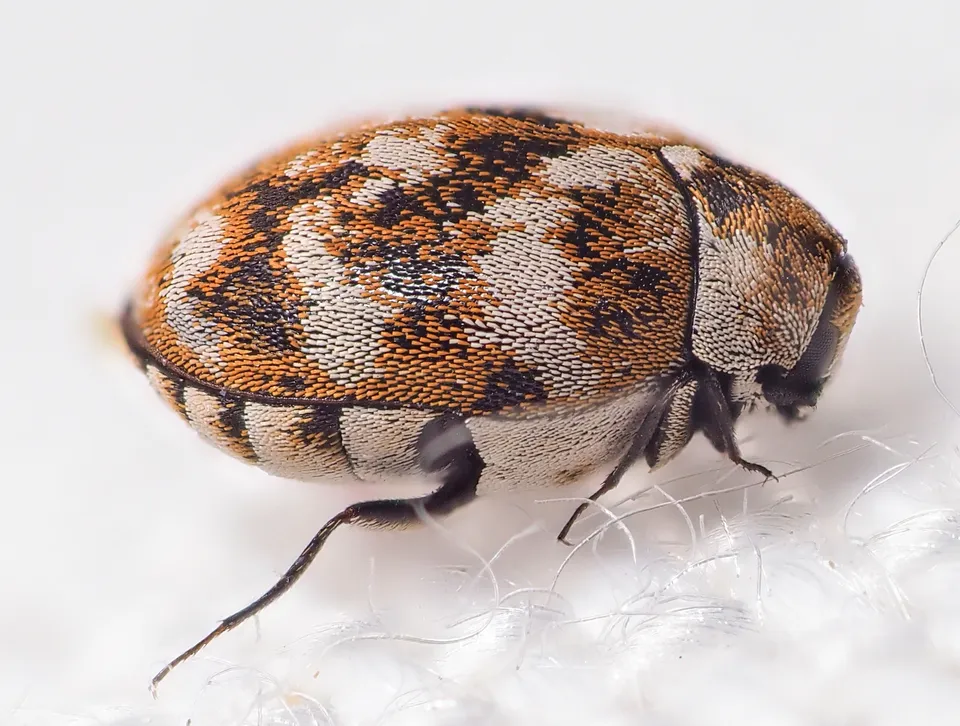
| Carpet beetle (adult) | Rounder, like a tiny ladybug, covered in colored scales; flies and often sits on windowsills; does not bite |
| Carpet beetle (larva) | Small, hairy, carrot-shaped "fuzzy worm" in closets or under rugs |
| Flea | Narrow and flattened side to side, not top to bottom; jumps instead of crawling slowly |
| Bat bug or bird bug | Nearly identical to the eye; usually linked to bats or birds roosting in the building; needs an expert |
| Tick | Adults have 8 legs, not 6; picked up outdoors, not in a mattress seam |
Carpet beetle adults are oval and only about 2 to 3.5 mm long in the varied carpet beetle, and their larvae carry bristly hairs [6]. Penn State notes that in some people with long-term exposure, those larval hairs cause an itchy rash that feels like being bitten. Adults feed on flower pollen and often show up near windows in spring [7]. See our carpet beetle profile.
Fleas are no more than about 1/8 inch long, reddish-brown and flattened side to side [8]. If the bug jumps, or you have pets, read what a flea looks like. For ticks, see what a tick looks like.
Bat bugs and bird bugs are close relatives. Kentucky says an entomologist or pest professional can tell them apart from bed bugs, which matters because the fix includes dealing with the bats or birds.
What signs do bed bugs leave behind?
Bed bugs leave behind stains, droppings, eggs and shed skins, often before you ever see a live bug. EPA lists these signs [2]:
- Rusty or reddish stains on sheets or mattresses from crushed bugs
- Dark spots about the size of a dot, which are droppings and may bleed into fabric like a marker
- Eggs and eggshells, and pale yellow skins that nymphs shed as they grow
- Live bed bugs
Check the mattress seams and tufts, the box spring, the bed frame and the headboard first. UC IPM says about 85% of bed bugs are found in or near the bed [3]. During the day they hide in places like seams, bed frames, dresser tables and cracks [5]. Our bedroom guide shows the other spots worth a look.
Bites alone cannot confirm bed bugs; the bug or its droppings, skins and eggs can. EPA says bites can resemble mosquito or chigger bites, rashes or hives, and some people do not react at all. Read more in bed bug bites.
What should you do if you find a bug that might be a bed bug?
Catch it, keep it and confirm it before you act. Press a strip of clear tape over the bug or drop it into a sealed bag or small jar, then compare it with the features above or use our bug identifier. A local Cooperative Extension office or a licensed pest professional can confirm a sample, which matters most for lookalikes such as bat bugs.
If it is a bed bug, start right away, because early detection makes an infestation easier to control [5]. Our step-by-step guide to getting rid of bed bugs covers heat, encasements, interceptors and when to call a professional. Renters should tell their landlord.
Frequently Asked Questions
Can you see bed bugs with the naked eye?
Yes, adults are easy to see: about the size of an apple seed. Nymphs are harder, and EPA says an unfed nymph can be nearly invisible. Eggs are about 1 mm and white, so Kentucky notes they are hard to see without magnification, especially on light fabric [1].
Can bed bugs fly?
No. Bed bugs have only small wing pads and cannot fly; they crawl. UC IPM describes adults as wingless [3]. A small bug that flies to a window is more likely a carpet beetle, and one that jumps is more likely a flea.
What color are bed bugs after they feed?
Before feeding, adults are brown and flat. After feeding they swell, stretch out and turn reddish-brown, according to EPA. Pale nymphs look red after a meal because the blood shows through their bodies.
Where do bed bugs come from if my home is clean?
Bed bugs are hitchhikers, not a sign of a dirty home. CDC says they ride in the seams and folds of luggage, bags, clothing, bedding and furniture, so people often carry them home from a trip without knowing it [5]. Used mattresses, couches and other secondhand furniture are another common route, which is why it pays to inspect them closely before they come inside.
Our Take
We think the single best identification habit is to look for the whole picture, not one bug. A flat, apple-seed-sized brown bug on its own could still be a bat bug or a beetle, but that bug plus dark dot-like droppings, pale shed skins and tiny white eggs in a mattress seam is very hard to argue with. That is the pattern EPA, UC IPM and the University of Kentucky all describe. If you catch something and are not sure, we would keep it in tape or a sealed bag and have it confirmed before buying any treatment, because the right fix depends on the right bug.
Sources
- Bed Bugs Appearance and Life Cycle. U.S. Environmental Protection Agency.
- How to Find Bed Bugs. U.S. Environmental Protection Agency.
- Pest Notes: Bed Bugs. UC Statewide IPM Program.
- Bed Bugs (ENTFACT-636). University of Kentucky Entomology, 2026.
- About Bed Bugs. CDC.
- Carpet Beetle Dermatitis. Penn State Extension, 2015.
- Pest Notes: Carpet Beetles. UC Statewide IPM Program.
- Pest Notes: Fleas. UC Statewide IPM Program, 2010.
Pest activity and species vary by region. If you are unsure what you have, your local Cooperative Extension office can identify it. Always read and follow pesticide labels. Spotted an error? Tell us.
Keep Reading
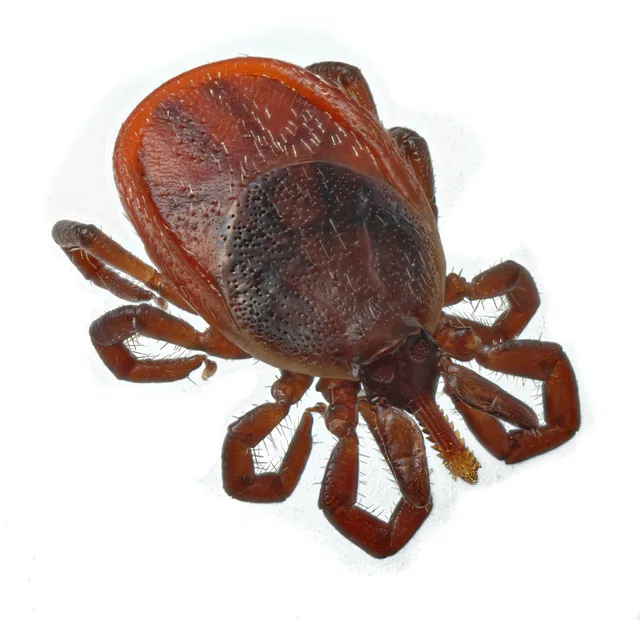
What Does a Tick Look Like? Common US Ticks Compared
What ticks look like: flat, 8-legged, teardrop-shaped arachnids. Compare blacklegged, lone star and American dog ticks by size, color, markings and season.
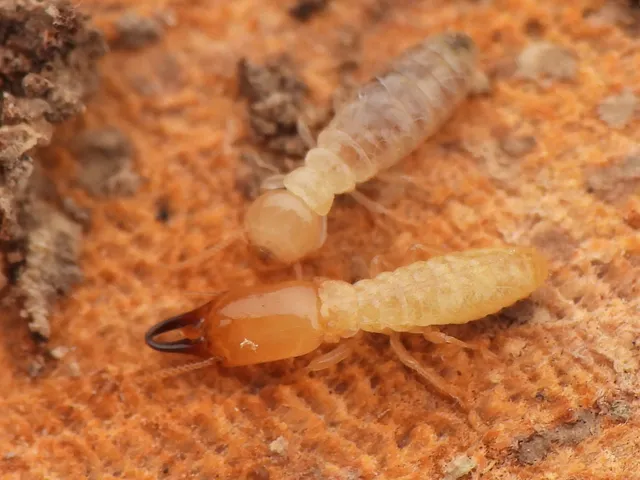
What Does a Termite Look Like? Termites vs Flying Ants
See what termites look like: creamy white workers, big-jawed soldiers and dark winged swarmers, and how to tell termites from flying ants by waist and wings.
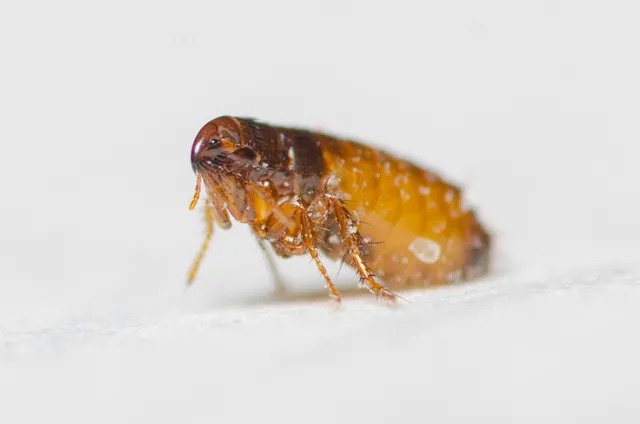
What Does a Flea Look Like? Size, Color, and Signs
What a flea looks like: size, color and shape, plus flea eggs, larvae, cocoons and flea dirt, and how to tell fleas apart from bed bugs and carpet beetles.
What Does a Brown Recluse Look Like?
How to recognize a brown recluse: a plain tan to brown spider with even-colored legs and 6 eyes in 3 pairs, why the violin mark misleads, and wolf spider tips.