How to Get Rid of Bed Bugs: What Actually Works
Quick Answer
To get rid of bed bugs, first confirm them, then combine several methods instead of trusting one spray. Vacuum seams, wash and dry bedding on high heat, zip the mattress and box spring into bed bug encasements, and set interceptor cups under the bed legs. Check every week. Most confirmed infestations still need a licensed pest professional, and you should keep watching for a full year.
On this page
- How can you confirm you have bed bugs?
- What is the step-by-step plan that works?
- Where do bed bugs hide, and how do you search?
- Which non-chemical methods kill bed bugs?
- Do sprays, dusts and bug bombs work?
- When should you call a licensed pest professional?
- How do you keep bed bugs from coming back?
- Frequently Asked Questions
- Our Take
- Sources
Key Takeaways
- Confirm the problem first: find a live bug, eggs, shed skins or dark fecal spots. Bites alone cannot prove bed bugs.
- Heat is the most reliable home tool: wash bedding in hot water and run the dryer on high.
- Encasements, interceptor cups and repeated vacuuming trap and remove bugs without chemicals.
- Over-the-counter bug bombs do not reach hiding bed bugs and can start fires.
- Confirmed infestations usually need a licensed pest professional, and renters should tell their landlord.
How can you confirm you have bed bugs?
You confirm bed bugs by finding the bugs or their traces, not by looking at bites. Adults are flat, oval, wingless and reddish-brown, about the size of an apple seed, or 5 to 7 mm long [1]. Young bed bugs are smaller and pale, and eggs are about 1 mm and pearly white, so a flashlight helps.
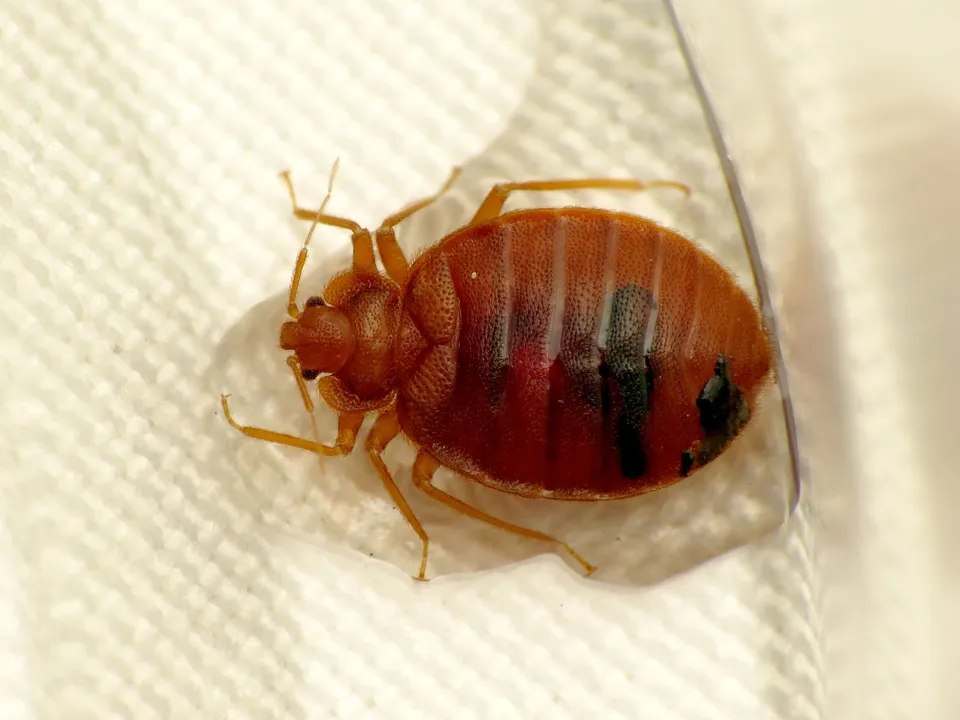
Look for these signs on the mattress, box spring and nearby furniture [2]:
- Rusty or reddish stains on sheets or the mattress from crushed bugs
- Dark spots about the size of a dot, which are droppings and can bleed into fabric like a marker
- Tiny pale eggs, eggshells and light-brown shed skins
- Live bugs, usually tucked into seams and folds
Bites are a poor clue. EPA notes that bites can look like mosquito or chigger bites, eczema, fungal rashes or hives, and some people do not react at all [2]. If you have itchy marks but no bugs, keep searching before you spend money on treatment. Our guides to what a bed bug looks like and bed bug bites show the details, and the bug identifier can help rule out lookalikes such as carpet beetles.
What is the step-by-step plan that works?
The plan that works is a sequence, repeated until no bugs turn up. EPA breaks do-it-yourself control into six steps: identify the problem, develop a plan, keep the infestation from spreading, prepare for treatment, kill the bugs, then evaluate and prevent [3]. EPA adds that you may need to repeat the steps to kill every bug and egg.
Two habits make the plan work. First, keep notes: EPA advises recording the dates and exact locations where you find bugs [3]. Second, stop the spread before you start killing. Zip the mattress and box spring into covers made to seal in bed bugs, pull the bed a few inches from the wall, and keep blankets and sheets off the floor. Items you cannot treat can go into a sealed plastic bag or container; EPA says leaving them sealed for up to a year lets any bugs inside die.
Where do bed bugs hide, and how do you search?
Bed bugs hide close to where people sleep or rest. UC IPM says they usually stay within about 6 feet of the bed, and about 85% are found in or near the bed itself [4]. They can squeeze into cracks about as thin as a credit card.
Search in daylight with a bright flashlight. Strip the bed and check the mattress seams and tufts, the box spring joints, cracks in the bed frame and the back of the headboard, then nightstands, baseboards, loose wallpaper and any couch where someone naps [4]. CDC lists the same places plus dresser tables and cracks or crevices near the bed [5].
Interceptor cups under each bed leg catch bugs climbing to and from the bed. In one study cited by UC IPM, interceptors under bed legs caught six times more bed bugs than people found by looking. EPA suggests checking and cleaning them weekly. For a room-by-room view, see our bedroom pest guide.
Which non-chemical methods kill bed bugs?
Heat is the method most sources lean on, because every life stage dies at high enough temperatures. UC IPM gives 113°F as the minimum lethal temperature, and professional whole-room heat treatments aim for 140°F for two hours or 130°F for three hours [4].
Laundry and the dryer
Wash bedding and clothing in water at 120°F, then dry on the hottest setting the fabric allows for at least 10 to 15 minutes [4]. The University of Kentucky notes that a dryer on medium to high heat for 10 to 20 minutes works for items that start out dry [6]. Carry laundry in sealed bags so bugs do not drop off on the way.
Freezing
Cold works, but slowly. EPA says a freezer must hold 0°F, with items sealed in a bag for at least three days, and suggests a thermometer because many home freezers run warmer [3].
Steam and vacuuming
Steam must reach at least 130°F at the surface and should not blow hard, so use a diffuser tip to avoid scattering bugs [3]. Vacuum seams, carpet edges and baseboards with a strong vacuum, repeat often, then seal the bag or canister contents in plastic and throw it out. One pass rarely gets every bug or egg.
Encasements
Covers built to seal in bed bugs keep bugs trapped inside the mattress or box spring until they die, and UC IPM notes they can also help prevent new infestations. Leave them on.
Do not try to cook the room by turning up the thermostat or running a space heater; EPA says it does not work and is dangerous.
Do sprays, dusts and bug bombs work?
Insecticides help only as part of the plan, not as the plan. UC IPM says insecticides alone will not control an infestation, and some bed bug populations resist pyrethroids, a common insecticide group [4]. Most household sprays have limited effect once dry, and baits do not work because bed bugs feed only on blood [6].
If you use a product, choose an EPA-registered one that lists bed bugs on the label [3]. Read and follow the label. The label is the law. Keep children and pets away from treated areas, and never apply products to sheets, pillows or anywhere you sleep unless the label says you can.
- Dusts: Silica gel and some diatomaceous earth products are registered for bed bugs. EPA says desiccant dusts can work but may take several months, and warns against pool or food grade diatomaceous earth, which can harm you if inhaled.
- Bug bombs (total-release foggers): UC IPM calls over-the-counter foggers ineffective and potentially harmful. EPA says fogger mist does not reach the cracks where bed bugs hide, foggers should never be your only method, and misuse can cause a fire or explosion.
- Rubbing alcohol and other flammable liquids: EPA lists rubbing alcohol among the things to avoid because it is dangerous. Kentucky adds that bleach, alcohol and open flames are ineffective and can start fires.
When should you call a licensed pest professional?
Call a licensed pest professional once you have confirmed bed bugs, especially if they have spread past the bed. UC IPM says confirmed infestations should be handled by trained professionals, and renters should contact their landlord or property owner [4]. Professionals can heat whole rooms or homes to lethal temperatures, follow up with targeted crack and crevice treatments, and inspect the units around yours.
Kentucky recommends routine building-wide inspections in apartments and other multi-unit buildings, because bugs move between units [6]. If cost is a barrier, the same source says encasements, interceptor traps and careful hand inspection can still hold numbers down.
Ask any company for a written plan with follow-up visits, and keep doing your part: laundering, decluttering and checking interceptors.
How do you keep bed bugs from coming back?
Prevention is mostly about what you carry home. Bed bugs hitch rides in the seams and folds of luggage, bags, clothing, bedding and furniture [5].
| Situation | What to do | Source |
|---|---|---|
| Hotel or rental stay | Check behind the headboard, under sheets and along mattress seams before unpacking; keep luggage off the floor | UC IPM, Kentucky |
| Coming home from a trip | Inspect luggage, then wash and dry clothes on the hottest safe setting | UC IPM |
| Used furniture or mattresses | Inspect thoroughly before bringing them inside; avoid curbside mattresses and sofas | UC IPM, Kentucky |
| After treatment | Inspect at least every 7 days and keep checking for a year | EPA |
| Throwing out infested items | Wrap them in plastic and label them as having bed bugs so nobody takes them | Kentucky |
Keep the encasements and interceptor cups in place after treatment; they are your early warning system. EPA advises inspecting at least every 7 days during the evaluate and prevent step and continuing to check for at least a year. If you also have pets scratching, read our guide on getting rid of fleas, since flea bites are sometimes blamed on bed bugs. The bed bug profile collects size, range and lookalike facts in one place.
Frequently Asked Questions
How long does it take to get rid of bed bugs?
Plan on weeks, not days, and a year of watching. Eggs hatch in about 10 to 15 days at room temperature, and bed bugs can survive 20 to 400 days without feeding depending on temperature and humidity [4]. That is why EPA expects repeated rounds and ongoing checks.
Do bed bugs spread disease?
No. CDC says bed bugs are not known to spread diseases to people, though their bites can itch and cost you sleep [5]. Scratched bites can become infected, so see a doctor if a bite looks infected.
Will a bug bomb get rid of bed bugs?
Not on its own. EPA says fogger spray does not reach the cracks and crevices where bed bugs hide and can cause fires or explosions if misused; UC IPM calls over-the-counter foggers ineffective. Heat, encasements, vacuuming and a professional treatment do more.
Our Take
We think the most useful mindset is that bed bugs are a project, not a product purchase. Every source we relied on, from EPA to UC IPM and the University of Kentucky, says the same thing in different words: no single spray fixes this. The tools that do work are boring and repeatable, like hot laundry, encasements, vacuuming, interceptor cups and weekly checks. If you are a renter, we would tell the landlord early, because bugs move between units. If the bugs keep showing up after a few weeks of steady effort, we would stop experimenting and bring in a licensed professional who offers follow-up visits.
Sources
- Bed Bugs Appearance and Life Cycle. U.S. Environmental Protection Agency.
- How to Find Bed Bugs. U.S. Environmental Protection Agency.
- Do-it-yourself Bed Bug Control. U.S. Environmental Protection Agency.
- Pest Notes: Bed Bugs. UC Statewide IPM Program.
- About Bed Bugs. CDC.
- Bed Bugs (ENTFACT-636). University of Kentucky Entomology, 2026.
Pest activity and species vary by region. If you are unsure what you have, your local Cooperative Extension office can identify it. Always read and follow pesticide labels. Spotted an error? Tell us.
Keep Reading

How to Get Rid of Mosquitoes in Your Yard
Get rid of yard mosquitoes at the source: dump standing water weekly, clean gutters, cover rain barrels, treat ponds, keep screens tight and call local control.
How to Get Rid of Stink Bugs Indoors
Get rid of stink bugs indoors without the smell: vacuum or drop them in soapy water, never crush them, and seal cracks before fall, when they move inside.

How to Get Rid of Silverfish
Get rid of silverfish by drying out damp rooms, fixing leaks, clearing old paper and boxes, and catching them in simple jar traps. See when dusts or a pro help.
How to Get Rid of Drain Flies
Get rid of drain flies by finding the breeding drain with a cup test, then scrubbing out the slimy film. Boiling water and bleach fail; here is what works.
How to Get Rid of Fleas in the House
Get rid of fleas in the house: have your vet treat every pet, vacuum daily, wash pet bedding, treat flea hot spots and keep at it for weeks while cocoons hatch.

How to Get Rid of Termites: DIY vs Professional
Termites in your house need a licensed pro, but you can spot the signs, fix moisture and wood-to-soil contact, and choose a company wisely. Here is what helps.