How to Get Rid of Silverfish

Quick Answer
To get rid of silverfish, make your home too dry for them. Run a dehumidifier or fan in damp basements, bathrooms and laundry rooms, fix dripping pipes, and clear out stacks of old paper, cardboard and books. Store dry food in tight containers and vacuum often. Catch the rest with tape-wrapped glass jars, and use an insecticide dust only in dry cracks if they persist.
On this page
- How do you get rid of silverfish, step by step?
- What attracts silverfish to your house?
- Where do silverfish hide?
- How do you make a silverfish trap?
- Do you need insecticide for silverfish?
- How do you keep silverfish from coming back?
- When should you call a pest professional?
- Frequently Asked Questions
- Our Take
- Sources
Key Takeaways
- Silverfish need damp air; Ohio State reports they prefer 75 to 95 percent relative humidity, so drying the room is the most important step.
- They eat starch and paper, including book bindings, wallpaper paste and cereal, so decluttering and sealed food storage remove both food and hiding places.
- A small glass jar wrapped in masking tape makes a simple trap: silverfish climb in and cannot climb the slick glass back out.
- Insecticides are generally not needed; foggers are not recommended, and baits rarely work.
- Silverfish are a nuisance, not a health threat, but a persistent problem points to hidden moisture that may need a licensed professional.
How do you get rid of silverfish, step by step?
Silverfish are a moisture problem first. Ohio State University Extension says silverfish "live and develop in damp, cool places (preferring 75 to 95 percent relative humidity)," and that lowering the home's humidity with dehumidifiers and fans is often helpful [2]. University of California IPM adds that silverfish need a lot of moisture, so dehumidifiers and ventilation can make an area unsuitable for them [1]. Work in this order:
- Find where they live. Check basements, laundry rooms, bathrooms (especially shower stalls), kitchens, closets and bookcases. Set a few jar traps or sticky traps overnight to see where most are caught.
- Dry the air. Run a dehumidifier in closed, damp rooms and use exhaust fans after showers and laundry.
- Fix the water. Repair dripping faucets, leaking pipes and sweating plumbing, and patch gaps around pipes and conduits [1].
- Clear the clutter. Remove old newspapers, magazines, cardboard boxes, books and stored fabrics you do not need. Ohio State lists these as food and hiding places [2].
- Seal food and clean. Keep cereal, flour and pet food in tight-lidded containers, and vacuum floors, shelves and cracks to remove crumbs, dust and the silverfish you see.
- Trap and monitor. Keep jar traps out for a few weeks to catch stragglers and to check that numbers are falling.
Dry air does more against silverfish than any product: they cannot thrive where humidity stays low.
What attracts silverfish to your house?
Moisture, starch and undisturbed hiding places. UC IPM lists their foods as dry starchy foods, paper with glue or paste, book bindings, clothing starch, household dust, dead insects and fungi [1]. Ohio State adds wallpaper paste and notes that silverfish can contaminate dried foods and chew holes in clothing [2].
They often arrive with your belongings. Ohio State says silverfish and firebrats typically enter homes in food containers, furniture, old books, papers and old starched clothing. Because they grow slowly, "a large infestation in the house usually indicates a longtime infestation" [2].
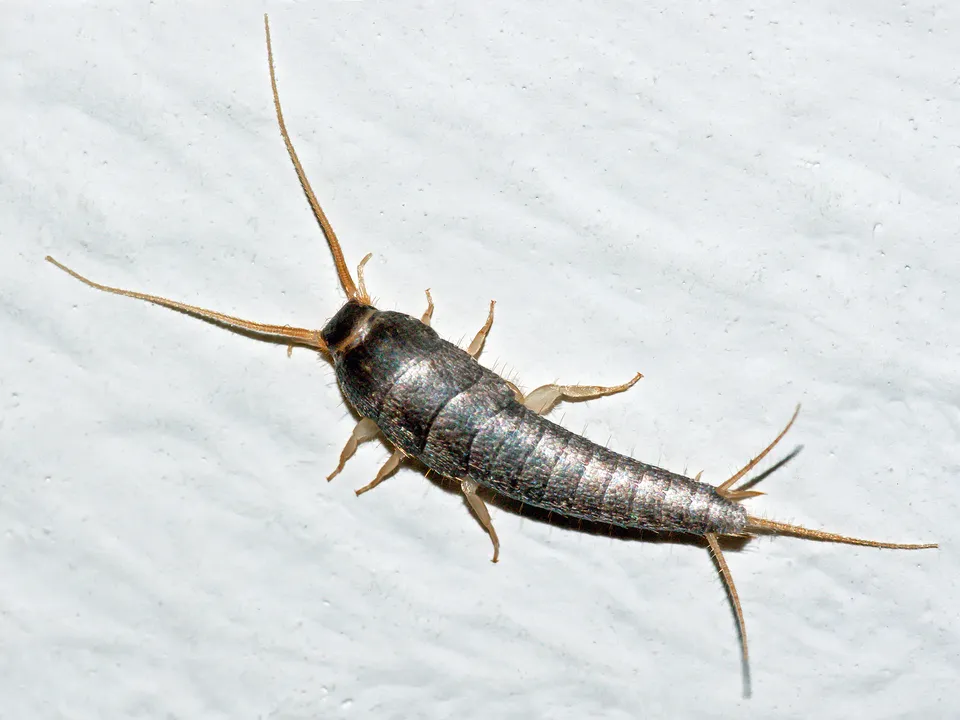
Silverfish also have a close cousin, the firebrat, which likes the opposite climate. The table shows why the fix depends on which one you have:
| Silverfish | Firebrat | |
|---|---|---|
| Color | Shiny silver or pearl gray | Mottled gray or brown, duller |
| Size | About 1/2 inch, up to 3/4 inch | About 1/2 inch |
| Favorite places | Damp, cool rooms: basements, bathrooms, laundry rooms | Hot spots: near furnaces, ovens, boilers, fireplaces, summer attics |
| Climate they like | High humidity (75 to 95 percent) | Above 90 F, humidity as low as 30 percent |
| Main fix | Lower the humidity and fix leaks | Seal and clean hot areas; target cracks near heat sources |
Colors, sizes and climate from UC IPM and Ohio State University Extension.
Not sure it is a silverfish? The bug identifier tool can help, and our pest library has the profile.
Where do silverfish hide?
In dark, damp, undisturbed spots, and they come out at night. University of Minnesota Extension says silverfish are found indoors in cool, damp, dark places throughout the year, often in basements but also in many other rooms [3]. Ohio State notes they sometimes get trapped in bathtubs and sinks, because they cannot climb the slick sides [2].
Signs to look for include irregular holes or scraped areas on paper, book covers and wallpaper, tiny pepper-like droppings, and delicate, dust-like scales near damaged items. UC IPM notes that silverfish have weak jaws, so they scrape at paper rather than bite through it, and feeding often starts in one spot and spreads as unconnected holes [1]. Start your search in the bathroom and kitchen.
How do you make a silverfish trap?
A small glass jar is enough. UC IPM describes "small, glass jars covered on the outside with masking tape": silverfish climb up the rough tape, fall into the jar, and "can't climb back up the slick sides." Place the jars in corners and along edges where silverfish are likely to forage [1]. Sticky traps sold for cockroaches also work to detect and monitor them, and Ohio State says sticky traps can reduce small populations [2].
Empty the jars into a sealed bag or a toilet each morning, and move them to wherever you catch the most. If catches drop week after week, your drying and cleanup are working.
Do you need insecticide for silverfish?
Usually not. Ohio State states that "insecticides are generally not needed for management" of silverfish, and that sanitation and lower humidity are the main tools [2]. UC IPM warns that controlling large populations is "almost impossible" without removing dripping water and moist surfaces [1].
If silverfish persist after you have dried and cleaned, UC IPM describes these options:
- Dusts in dry cracks. Silica gel, diatomaceous earth and pyrethrin dusts "remain effective indefinitely in dry locations." Apply a thin, barely visible layer with a bulb duster into cracks, wall voids and behind baseboards; thick piles do not work, and wet dust loses effectiveness.
- Crack-and-crevice sprays. Small amounts of household products labeled for silverfish can be applied into cracks, baseboards, closets and pipe openings. Keep them out of sinks, drains, water and food.
- Not baits or foggers. Baits "aren't very successful" because silverfish tend not to feed on them, and "foggers aren't recommended" for silverfish and firebrats.
Read and follow the label. The label is the law. Use only EPA-registered products labeled for silverfish and for the place you are treating, keep children and pets away from treated areas and from any dust, and store products in their original containers out of reach. UC IPM says a properly applied product should show results within a few weeks; if not, silverfish are likely coming from untreated hiding places [1].
Without fixing the moisture, insecticides only buy time; dry air is the lasting treatment.
How do you keep silverfish from coming back?
Keep the house dry and keep their food and hiding places moving. UC IPM recommends periodically cleaning out closets, cabinets and storage containers, and occasionally moving the magazines, papers and books on your shelves, since undisturbed stacks give silverfish both food and shelter [1]. Routine cleaning also removes the dust and debris they feed on.
Watch what comes in, too. Because silverfish often ride into homes in cardboard boxes, old books, papers, used furniture and stored clothing [2], check those items before you bring them indoors, and unpack moving boxes promptly instead of storing the cardboard in a damp basement. Good habits to keep:
- Keep the dehumidifier running in basements and laundry rooms through humid months, and empty it often.
- Use exhaust fans during and after showers, and let bathrooms air out.
- Store papers and fabrics off basement floors, in sealed plastic bins rather than cardboard.
- Leave a jar trap or two out in problem rooms as an early warning.
Moving the stacks, drying the air and checking boxes at the door keep a small silverfish problem from becoming a long one.
When should you call a pest professional?
Silverfish do not bite people and are generally considered harmless; Ohio State calls them a nuisance that damages paper, food and clothing [2]. Call a licensed pest professional when:
- They keep showing up after several weeks of drying, decluttering and trapping. Ohio State advises using "a reputable, licensed pest control operator" for persistent problems or hard-to-find sources.
- They seem to come from inside walls. Ohio State notes that wall-void treatments may require drilling small holes, and some products are restricted to licensed applicators.
- You find hidden water damage, such as damp walls or a leak you cannot reach. A plumber or contractor may be needed before any pest treatment can work.
- Valuable papers, books or textiles are being damaged. Move them to dry storage in sealed plastic containers right away.
If you have other bugs in damp rooms too, see our guides to drain flies and roaches, or browse all How to Get Rid Of guides.
Frequently Asked Questions
Are silverfish harmful?
No, not to people. UC IPM notes they have very weak jaws that scrape rather than bite [1]. They can damage paper, book bindings, wallpaper, stored food and clothing.
Does seeing one silverfish mean an infestation?
Not necessarily, but it means conditions suit them. Silverfish grow slowly, and Ohio State says a large infestation usually means a long-standing one [2]. Set a few jar traps to see how many are around.
How long do silverfish live?
A long time for an insect. UC IPM puts the silverfish lifespan at about 3 years, and Ohio State says adults may live two to eight years and can survive months without food [1]. That is why removing moisture and hiding places matters more than waiting them out.
Our Take
We think silverfish are a humidity problem dressed up as a bug problem. The extension guidance we relied on keeps coming back to the same point: without damp air and leaky pipes, they struggle, and with them, no product holds for long. So we would start with a dehumidifier, a fixed drip and a recycling bin full of old cardboard and magazines, then let a few tape-wrapped jars show whether it is working. Dusts in dry cracks are a reasonable next step, used by the label. Foggers are not worth it here. If silverfish keep coming after weeks of drying out, we would look for hidden moisture with a professional rather than add more products.
Sources
- Pest Notes: Silverfish and Firebrats. UC Statewide IPM Program, 2009.
- Silverfish and Firebrats (ENT-64). Ohio State University Extension, 2015.
- Silverfish: What insect is this?. University of Minnesota Extension.
Pest activity and species vary by region. If you are unsure what you have, your local Cooperative Extension office can identify it. Always read and follow pesticide labels. Spotted an error? Tell us.
Keep Reading

How to Get Rid of Mosquitoes in Your Yard
Get rid of yard mosquitoes at the source: dump standing water weekly, clean gutters, cover rain barrels, treat ponds, keep screens tight and call local control.
How to Get Rid of Stink Bugs Indoors
Get rid of stink bugs indoors without the smell: vacuum or drop them in soapy water, never crush them, and seal cracks before fall, when they move inside.
How to Get Rid of Drain Flies
Get rid of drain flies by finding the breeding drain with a cup test, then scrubbing out the slimy film. Boiling water and bleach fail; here is what works.
How to Get Rid of Fleas in the House
Get rid of fleas in the house: have your vet treat every pet, vacuum daily, wash pet bedding, treat flea hot spots and keep at it for weeks while cocoons hatch.

How to Get Rid of Termites: DIY vs Professional
Termites in your house need a licensed pro, but you can spot the signs, fix moisture and wood-to-soil contact, and choose a company wisely. Here is what helps.

How to Get Rid of Carpenter Bees
Get rid of carpenter bees by painting bare wood, filling old holes in fall, and treating only active tunnels if needed. Males can't sting, and bees pollinate.