How to Get Rid of Roaches for Good
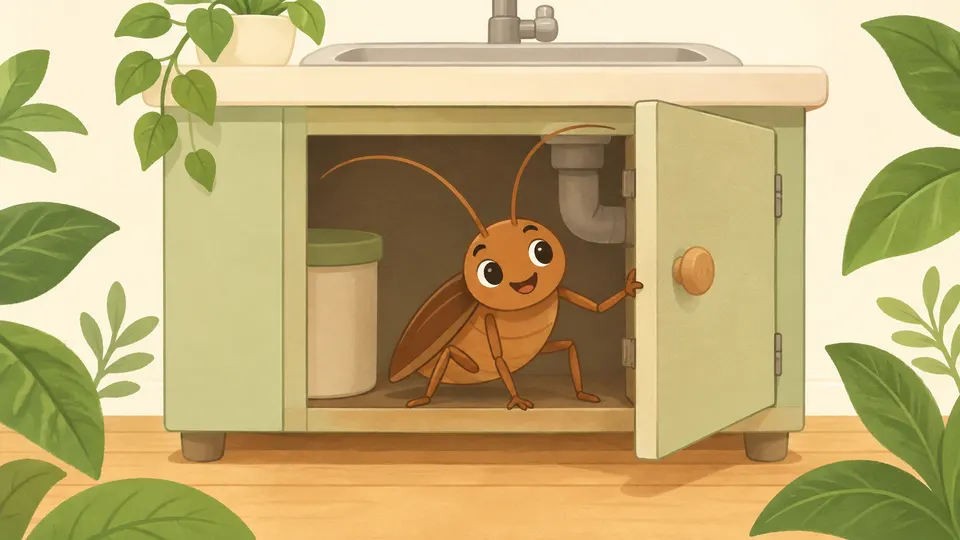
Quick Answer
To get rid of roaches for good, first figure out which kind you have, then take away their food, water and hiding places, and use sticky traps to find where they live. Put cockroach baits (gel or stations) right next to those spots, keep sprays away from the baits, and give the baits a week or more to work. Skip bug bombs. Call a licensed pest professional for heavy or stubborn infestations.
On this page
Key Takeaways
- The German cockroach, about 1/2 inch long with two dark stripes behind the head, is the roach that breeds indoors and causes most infestations.
- Cleaning, fixing leaks and sealing cracks come first; baits work better when roaches have nothing else to eat.
- Baits are the main pesticide tool for roaches. Place them where roaches hide and expect results to take 7 days or longer.
- Foggers (bug bombs) do not reach the cracks where roaches hide, and extra cans add fire and health risks without better control.
- Sticky traps tell you where roaches are and whether your plan is working.
Which cockroach do you have?
Knowing the species tells you where to look and whether the roaches are living inside or just wandering in. UC IPM describes four common household species [1]:
| Species | Size and look | Where it lives |
|---|---|---|
| German | About 1/2 inch, light brown, two dark stripes behind the head | Kitchens and bathrooms, warm and humid spots near food |
| Brownbanded | About 1/2 inch, light bands across the wings and body | Behind pictures, inside furniture legs and appliances, in clutter |
| Oriental | About 1 1/4 inches, almost black, short wings | Cool, damp basements, drains, garages |
| American | About 2 inches, reddish brown, pale edge behind the head | Sewers, storm drains, water meter boxes; wanders indoors |
Penn State Extension calls the German cockroach the most common roach in homes and apartments, usually found near dishwashers, stoves and sinks, hiding in cracks by day [2]. If you see small roaches in the kitchen or bathroom, assume German cockroaches until proven otherwise, because they breed entirely indoors. The big American and Oriental roaches usually come in from outdoors or drains, so sealing gaps and fixing moisture matter most for them.
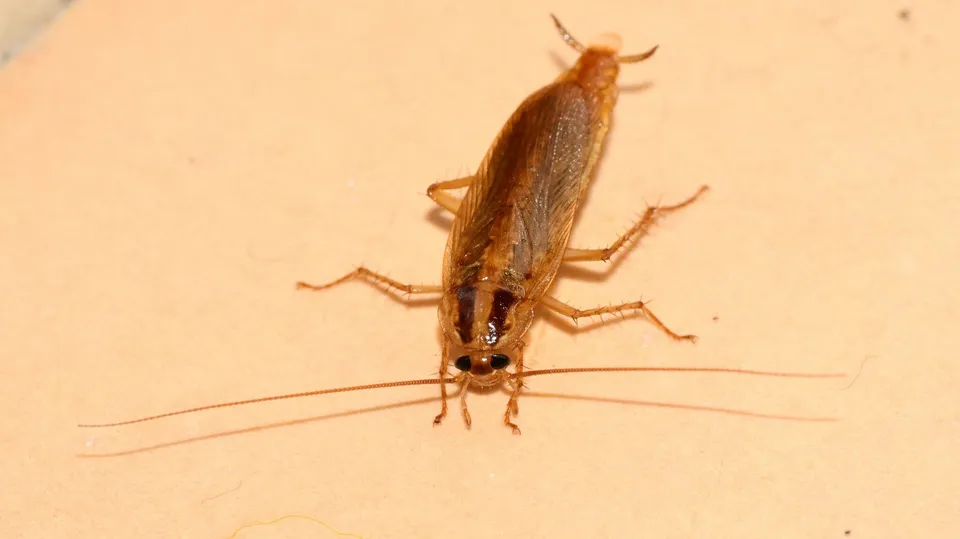
Not sure what you caught? Try our bug identifier or read the cockroach profile.
Why do roaches keep coming back?
Roaches come back because a few survivors rebuild the population fast. UC IPM says a German cockroach female carries a beige egg case until a day or two before it hatches, each case holds about 30 young, and she can make a new one every few weeks. By UC IPM's estimate, one female and her offspring can produce over 30,000 roaches in a year. Penn State's figures are similar in spirit: up to 48 eggs per case and more than 10,000 descendants a year, assuming two generations [2].
That math explains two things. First, killing the roaches you see does little if egg cases and nymphs stay hidden. Second, any plan has to keep working for weeks, not just one evening.
How do you cut off food, water and hiding places?
Start here, because every other step works better once roaches are hungry. UC IPM's non-chemical steps are the core of a lasting fix [1]:
- Food: store food in sealed containers, keep trash in lidded bins, wipe up crumbs and spills right away, and do not leave dirty dishes or pet food out overnight.
- Water: fix dripping faucets and leaking pipes, and improve ventilation where condensation builds up.
- Clutter: get rid of stacks of paper bags and cardboard, which give roaches shelter.
- Cracks: caulk gaps where pipes pass through walls and around cabinets, and add door sweeps and weather stripping.
- Vacuuming: vacuum cracks to remove roaches, shed skins, droppings and egg cases. UC IPM suggests a vacuum with a HEPA or triple filter to keep allergens from blowing around.
Then set sticky traps to find the hot spots. Put them where walls meet floors, inside cabinets and under appliances, and check them daily for several days. Penn State suggests ten or more trap sites for about a week to map an infestation. The traps with the most roaches show where to focus baits. Our guides to the kitchen and bathroom list other pests that use the same hiding spots.
Which roach baits work best, and how do you use them?
Baits are the main pesticide tool for cockroaches. UC IPM says gel baits go in small dabs into cracks where roaches hide or travel, while bait stations hold the insecticide in tamper-resistant containers that can reduce exposure for people and pets [1]. Penn State also calls baiting an effective way to control or eliminate German cockroaches.
Read and follow the label. The label is the law. Use only EPA-registered products labeled for cockroaches and for indoor use, and keep every bait, gel and dust where children and pets cannot reach it.
How to get the most from baits:
- Place them close. Baits do not draw roaches from far away, so put them right where your sticky traps caught the most roaches, along walls, under appliances and inside cabinets.
- Be patient. UC IPM says it may take 7 days or longer before you see fewer roaches.
- Do not spray near baits. Sprays can repel roaches and scatter them to new areas, which defeats the bait.
- Keep it clean. Removing other food makes the bait the best meal in the house.
- Refresh as needed. Gel baits can harden and need reapplying.
Dusts are a second option for hidden voids. UC IPM says boric acid dust works best as a very thin film in cracks and under appliances where people will not touch it, must stay dry, can take 7 days or more, and should not be used outdoors because it harms plants. Penn State lists boric acid, silica aerogel and diatomaceous earth dusts for cracks and crevices, kept away from children and pets. The same label rule applies to every dust.
If ants are also raiding your kitchen, see our ant guide for how to handle them.
Do bug bombs get rid of roaches?
Usually not, and they carry real risks. NPIC explains that foggers release a mist that settles on exposed surfaces and does not reach into voids, cracks and crevices where pests hide, and it says foggers may not work on hiding pests such as cockroaches and bed bugs [3]. NPIC adds that using extra foggers will not control pests any better than the number on the label, that fogger contents can catch fire, and that foggers may pose more risks to children and people with asthma. Penn State likewise says residual sprays and foggers are of little value and may scatter roaches.
If you still choose a fogger, EPA's safety precautions say to use no more than one per room, keep it at least six feet from pilot lights, flames and appliances that switch on and off, remove children and pets, and stay out until the label's waiting time has passed [4]. For roaches, a bug bomb mostly spreads the problem around while the colony stays hidden. The same is true for bed bugs.
When should you call a pest professional?
Call a licensed pest professional when roaches are still showing up after several weeks of cleaning, sealing and baiting, when you see them in many rooms, or when you live in an apartment where neighbors share walls and pipes. UC IPM recommends a professional for serious indoor infestations and large or complex problems. Penn State notes that roaches seen in daylight can be a sign of a heavy population. Roaches matter for health too: UC IPM says indoor cockroach allergens are a risk factor for asthma in children, and roaches can carry bacteria that cause food poisoning. If someone in your home has asthma, mention the roaches to their doctor. For other kitchen invaders, see our guides to mice and all get-rid-of guides.
Frequently Asked Questions
How long does it take to get rid of roaches?
Expect weeks, not days. UC IPM says baits and boric acid can each take 7 days or longer to show results, and German cockroach egg cases keep hatching while you work. Keep checking sticky traps until they stay empty for several weeks.
Does seeing one roach mean I have an infestation?
Not always. A single large American or Oriental roach may have wandered in from outside or a drain. Small roaches in a kitchen or bathroom, droppings that look like dark specks, or roaches out in daylight are stronger signs of an indoor population, according to UC IPM and Penn State Extension.
Are cockroaches dangerous?
They are mainly a health nuisance. UC IPM links indoor cockroach allergens to childhood asthma and says roaches can carry bacteria such as Salmonella that cause food poisoning. Keeping food sealed and vacuuming with a HEPA filter helps reduce both risks.
Our Take
We think the roach problems that drag on for months usually have the same cause: sprays and bug bombs used in place of patience. Based on UC IPM, Penn State and NPIC guidance, our plan is sanitation and leak repair first, sticky traps to find the nests, then baits placed right where the traps are busiest, with no spraying near them. That approach is slower to show results than a can of spray, but it targets the colony instead of the few roaches you happen to see. We would skip foggers entirely for roaches. And if you rent, we would bring in the landlord early, since roaches move between units and one apartment rarely solves it alone. Our editorial policy explains how we pick sources.
Sources
- Pest Notes: Cockroaches. University of California Statewide IPM Program, 2019.
- German Cockroaches. Penn State Extension.
- Total Release Foggers. National Pesticide Information Center, 2025.
- Safety Precautions for Total Release Foggers. U.S. Environmental Protection Agency.
Pest activity and species vary by region. If you are unsure what you have, your local Cooperative Extension office can identify it. Always read and follow pesticide labels. Spotted an error? Tell us.
Keep Reading

How to Get Rid of Mosquitoes in Your Yard
Get rid of yard mosquitoes at the source: dump standing water weekly, clean gutters, cover rain barrels, treat ponds, keep screens tight and call local control.
How to Get Rid of Stink Bugs Indoors
Get rid of stink bugs indoors without the smell: vacuum or drop them in soapy water, never crush them, and seal cracks before fall, when they move inside.
How to Get Rid of Silverfish
Get rid of silverfish by drying out damp rooms, fixing leaks, clearing old paper and boxes, and catching them in simple jar traps. See when dusts or a pro help.
How to Get Rid of Drain Flies
Get rid of drain flies by finding the breeding drain with a cup test, then scrubbing out the slimy film. Boiling water and bleach fail; here is what works.
How to Get Rid of Fleas in the House
Get rid of fleas in the house: have your vet treat every pet, vacuum daily, wash pet bedding, treat flea hot spots and keep at it for weeks while cocoons hatch.

How to Get Rid of Termites: DIY vs Professional
Termites in your house need a licensed pro, but you can spot the signs, fix moisture and wood-to-soil contact, and choose a company wisely. Here is what helps.