What Does a Tick Look Like? Common US Ticks Compared
Quick Answer
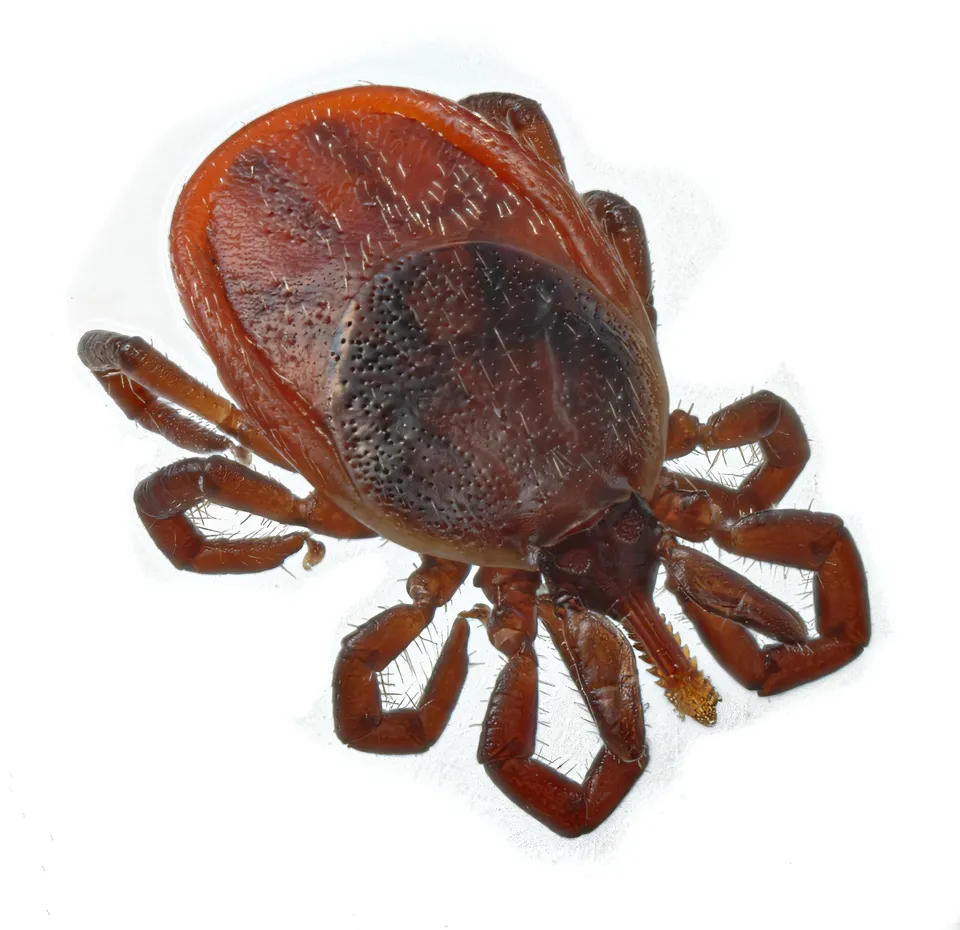
A tick looks like a small, flat, teardrop-shaped bug with 8 legs and mouthparts that stick out from the front, so it seems to have no separate head. Unfed adults of common U.S. ticks are only about 2 to 5 mm long, brown, reddish-brown or reddish-orange, often with a hard shield or white markings on the back. A tick that has fed swells into a smooth, rounded, bean-like shape.
On this page
Key Takeaways
- Ticks are arachnids, not insects: adults and nymphs have 8 legs, while newly hatched larvae have only 6.
- Unfed adults are tiny (about 2 to 5 mm), and nymphs can be as small as a pinhead, about 1 to 2 mm.
- Blacklegged ticks are reddish-orange with black legs, lone star females have one white dot, and American dog ticks have a whitish pattern.
- A tick that has fed can swell to about 10 mm, so a smooth, rounded "bean" stuck to skin or fur is often a tick.
- If one is attached, remove it promptly the way CDC describes and watch for rash or fever in the weeks after.
What does a tick look like up close?
An adult tick has a flat, oval or teardrop-shaped body, 8 legs and a small set of mouthparts that points forward from the front of the body. Most ticks people find in the U.S. are hard ticks, named for the scutum, a hard shield on the back [1]. On adult females the scutum covers only about the front half of the back, while on males it covers the whole back, which is a quick way to tell the sexes apart.
Check these features with a bright light and, if you have one, a magnifier:
- Legs: 8 on adults and nymphs. Larvae have only 6 legs when they hatch and gain the last pair when they molt into nymphs [2].
- Body: one flat, unsegmented-looking body with no waist, unlike an insect, which has three body sections.
- Head: what looks like a head is really the mouthparts. Kentucky notes that these parts anchor the tick with tiny hooks while it feeds.
- Wings and antennae: none.
If a tiny bug has 8 legs, a flat teardrop body and no visible head, treat it as a tick until you have a closer look. Our tick profile has the season and range facts in one place.
How big is a tick at each life stage?
Ticks are smaller than most people expect. UNH Extension describes blacklegged (deer) tick nymphs as about the size of a pinhead, 1 to 2 mm, and adults as just over 1/16 inch, about 2 to 3 mm [2]. Illinois Extension puts lone star adults at about 1/8 inch and American dog tick adults at 3/16 inch [3].
Each tick goes through four stages: egg, larva, nymph and adult. Kentucky says larvae are smaller than 2 mm when they hatch and that each active stage takes a blood meal before molting, with adult females feeding for about 7 to 10 days [1]. Lone star larvae and nymphs are so small that people call them seed ticks.
Size changes a lot after a meal. According to UNH, a fully fed adult female blacklegged tick can swell to about 3/8 inch (10 mm) long, and Penn State notes that a fed American dog tick female may reach the size of a grape [4]. UNH describes a fully fed female as smooth and shiny, which is why an attached tick that has been feeding for days can look more like a small seed than a bug.
How do you tell the common U.S. ticks apart?
Color, markings and the length of the mouthparts separate the three ticks that bite people most often in the eastern half of the country. Kentucky's identification notes are the basis for this table [1].
| Feature | Blacklegged (deer) tick | Lone star tick | American dog tick |
|---|---|---|---|
| Adult body color | Reddish-orange (female) | Reddish-brown | Brown |
| Key marking | Black shield and black legs | One white dot on the female's back | Whitish, mottled pattern on the shield |
| Mouthparts | Long | Long | Short |
| Unfed adult size | About 2 to 3 mm | About 3 mm (1/8 inch) | About 4 to 5 mm (3/16 inch) |
| Nymphs | Translucent body, black shield, pinhead size | Reddish-brown, round | Brown or tan, rarely seen on people |
| Linked illnesses (examples) | Lyme disease | Ehrlichiosis, red meat (alpha-gal) allergy | Rocky Mountain spotted fever |
Blacklegged (deer) tick
Blacklegged adults have a reddish-orange body with a black shield and black legs, while nymphs and larvae look translucent with a black shield. Kentucky notes that only ticks in this genus (Ixodes) transmit the bacterium that causes Lyme disease. The nymph is the stage to watch for, because at pinhead size it is easy to miss on skin.
Lone star tick
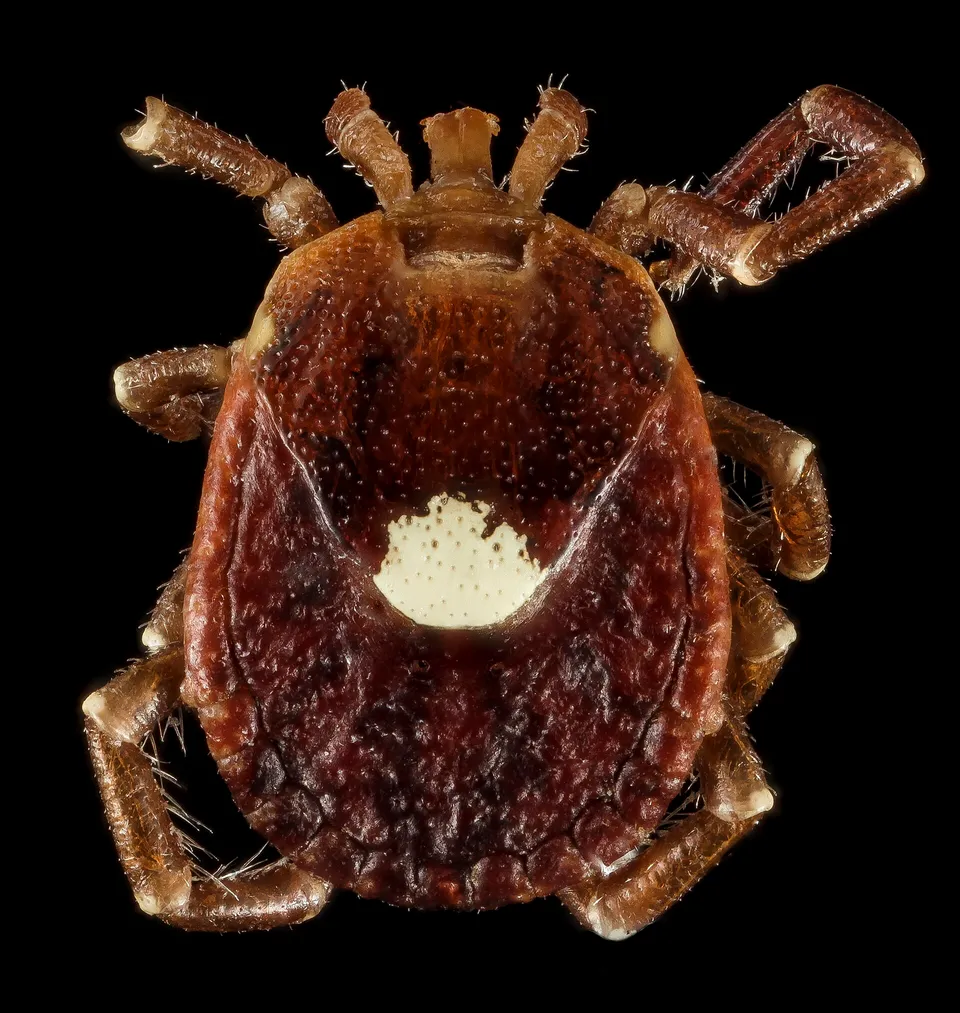
The lone star tick is reddish-brown, and the adult female carries a single white dot in the middle of her back [3]. Males have smaller white marks near the rear edge of the shield instead. Kentucky describes this species as an active hunter that will move toward a host, and its bite is associated with alpha-gal (red meat) allergy.
American dog tick
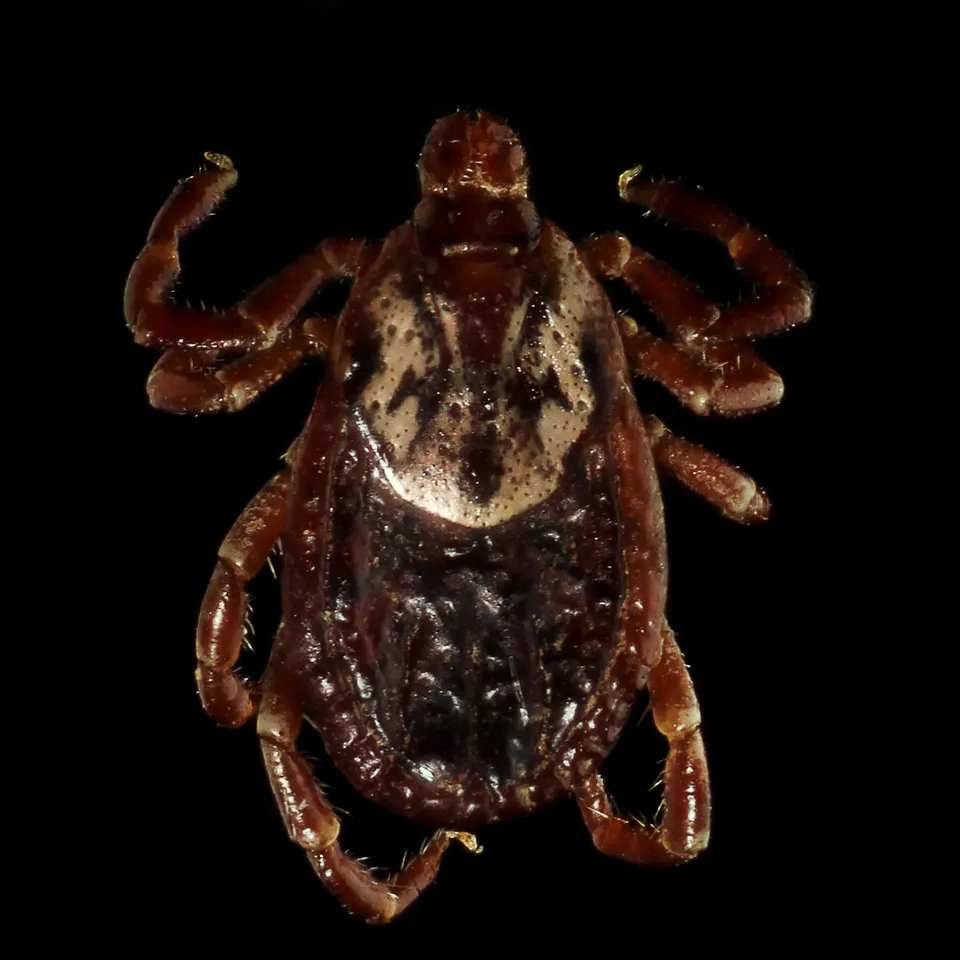
The American dog tick, also called the wood tick, is the largest of the three when unfed. Look for a brown body with a complex whitish pattern on the shield and short mouthparts. UNH describes the pattern as an obvious mottled pattern of surface markings [2]. Adults are the stage that usually bites people; the larvae and nymphs mostly feed on small mammals.
Where do these ticks live in the U.S.?
Ticks wait on grass, brush and leaf litter and grab a person or pet that brushes past. CDC describes the blacklegged tick as widely distributed across the eastern United States, the lone star tick as widely distributed in the Northeast, South and Midwest, and the American dog tick as widely distributed east of the Rocky Mountains, with limited areas in the West [5]. Along the Pacific coast, particularly in northern California, the tick to know is a close relative, the western blacklegged tick.
The lone star tick is historically a Southeastern tick, and its range is still growing. A 2026 study in CDC's journal states that its range "continues to expand northward and westward" [7]. So a white-dotted tick in a state where people rarely saw one a decade ago is not necessarily a misidentification.
Timing matters too. Kentucky gives these activity windows for adults and nymphs, and CDC adds that blacklegged adults may look for hosts on winter days when it is above freezing.
CDC puts the highest risk of American dog tick bites in spring and summer, and of blacklegged tick bites in spring, summer and fall. Yards that border woods or tall grass are worth checking; see our garden pests guide for what else lives there.
What bugs are often mistaken for ticks?
Counting legs settles most mix-ups. Ticks are arachnids, relatives of spiders, which UC IPM describes as having 8 legs and 2 body parts [9]. Insects such as bed bugs and fleas have 6 legs.
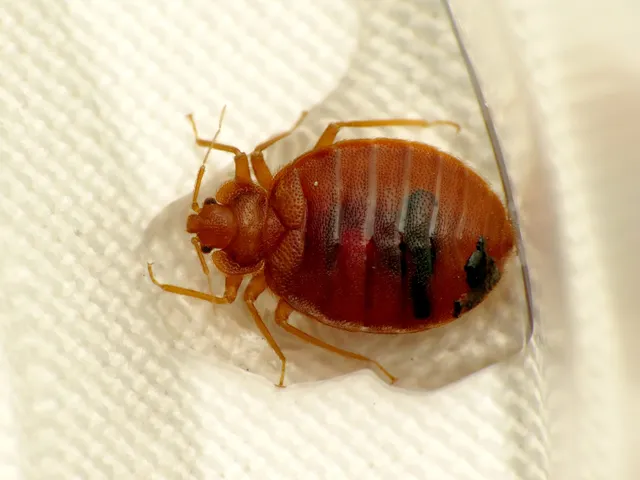
- Bed bugs: Kentucky lists ticks among the things bed bugs are most often confused with [8]. A bed bug has 6 legs, antennae and a visible head, and it hides in mattress seams rather than staying attached to skin. Compare the two in our guide to what a bed bug looks like.
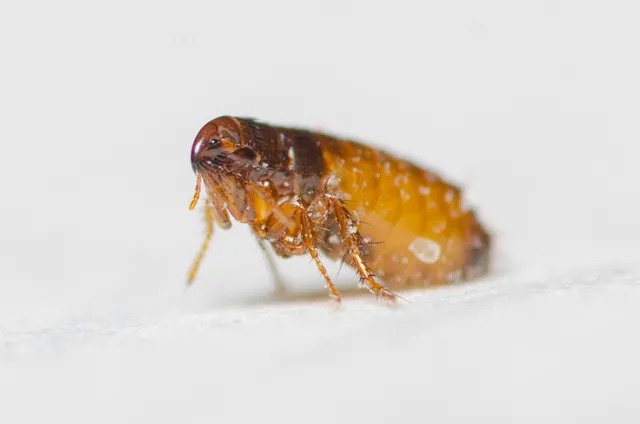
- Fleas: adult fleas are no more than 1/8 inch long, reddish-brown and flattened side to side [10], and they jump. See what a flea looks like.
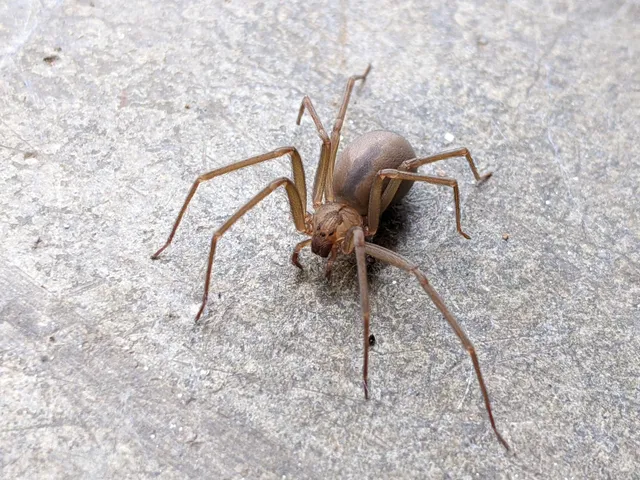
- Small spiders: they also have 8 legs, but a spider has a clear waist between two body parts, while a tick's body is one piece.
- Chiggers: these mites are reddish-orange specks only about 0.15 to 0.3 mm long, barely visible to the eye [11]; read more in our chigger profile.
If you are still unsure, our bug identifier walks you through the main questions step by step.
What should you do if you find a tick on you?
Remove an attached tick as soon as you find it. Do not wait for a doctor's visit to do it. CDC's page on what to do after a tick bite [6] shows the method with fine-tipped tweezers and explains why folk methods such as nail polish, petroleum jelly or heat are not recommended [6]. Follow CDC's steps rather than a shortcut.
For identification later, Kentucky suggests storing a removed tick in a sealed plastic bag with the date and the place you probably picked it up, and notes that your local Cooperative Extension office can identify it [1].
See a doctor if you develop a rash or fever within several days to weeks after removing a tick, and tell the doctor about the bite, when it happened and where you probably picked up the tick. That is CDC's advice, and it is the right call whatever the species. For more on bites in general, see our bites section or try the bite identifier, but remember that a bite alone cannot tell you which bug caused it.
Frequently Asked Questions
Can ticks jump or fly?
No. Ticks have no wings and do not jump. They wait on the tips of grass and leaves with their front legs held out, a behavior called questing, and grab on when a person or animal brushes past [1].
How long does a tick have to be attached to spread Lyme disease?
Kentucky says a blacklegged tick usually has to feed for a long time, about 36 hours, before the Lyme disease bacterium is passed on, although some other germs can pass much faster. That is why daily tick checks and prompt removal matter.
Can a lone star tick give you Lyme disease?
According to the University of Kentucky, no: the lone star tick cannot carry the bacterium that causes Lyme disease. Its bite is linked to other illnesses, including ehrlichiosis and alpha-gal (red meat) allergy, so a rash or fever after any tick bite is still a reason to see a doctor.
Can ticks live inside your house?
Usually not for long. Kentucky notes that ticks can hitch a ride indoors on pets and fall off in the home before they feed. The exception it names is the brown dog tick, which, unlike other ticks, can survive its entire life indoors and usually arrives on a dog.
Our Take
We think the most useful tick habit is to look small. Most people picture an engorged, bean-sized tick, but the stage that bites people most easily is the pinhead-sized nymph, and even an unfed adult is only a few millimeters long. If you live in the eastern half of the country, the three ticks in the table above cover most of what you will find, and the white dot, the black legs or the mottled shield usually tells you which one you have. Whatever the species, we would remove it the way CDC describes, keep it in a sealed bag with the date, and let a doctor decide what matters if a rash or fever follows.
Sources
- Ticks and Disease in Kentucky (ENTFACT-618). University of Kentucky Entomology.
- Biology and Management of Ticks in New Hampshire. UNH Extension.
- Ticks. Illinois Extension, 2017.
- Common Ticks and Tick-Borne Diseases in Pennsylvania. Penn State Extension.
- Where Ticks Live. CDC, 2025.
- What to Do After a Tick Bite. CDC, 2026.
- Heartland Virus in Lone Star Ticks, South Carolina, USA, 2021-2024. Emerging Infectious Diseases (CDC), 2021.
- Bed Bugs (ENTFACT-636). University of Kentucky Entomology, 2026.
- Spiders. UC Statewide IPM Program.
- Pest Notes: Fleas. UC Statewide IPM Program, 2010.
- Chiggers. Texas A&M AgriLife Extension.
Pest activity and species vary by region. If you are unsure what you have, your local Cooperative Extension office can identify it. Always read and follow pesticide labels. Spotted an error? Tell us.
Keep Reading
What Does a Termite Look Like? Termites vs Flying Ants
See what termites look like: creamy white workers, big-jawed soldiers and dark winged swarmers, and how to tell termites from flying ants by waist and wings.
What Does a Flea Look Like? Size, Color, and Signs
What a flea looks like: size, color and shape, plus flea eggs, larvae, cocoons and flea dirt, and how to tell fleas apart from bed bugs and carpet beetles.
What Does a Brown Recluse Look Like?
How to recognize a brown recluse: a plain tan to brown spider with even-colored legs and 6 eyes in 3 pairs, why the violin mark misleads, and wolf spider tips.
What Does a Bed Bug Look Like? Every Life Stage
What bed bugs look like at every stage: apple-seed adults, pale nymphs and pinhead eggs, with a size scale, lookalikes like carpet beetles and signs to check.