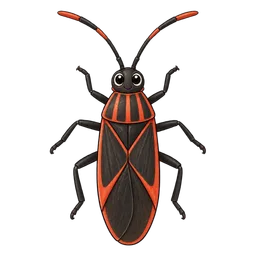
Boxelder Bug
Boisea trivittata · Garden & Overwintering Pests
Boxelder bugs feed mainly on the seeds and new leaves of boxelder trees and cluster in large numbers on sunny walls in fall. They slip into cracks around homes to spend the winter, and on warm days they wander into living areas. They are mainly a nuisance: they do not breed indoors, but crushed bugs smell and can stain fabrics.
Look for: A flat black bug about 1/2 inch long with three red-orange stripes behind the head and red-orange edges on its wings.
Quick facts
| Size | 12-13 mm |
|---|---|
| Legs | 6 |
| Usual colors | black, orange |
| Where in the home | Living Room, Garden |
| Active | All year |
| Peak | Sep, Oct, Nov, Dec, Jan, Feb, Mar |
| U.S. range | Found throughout the eastern U.S. west to Nevada, usually near boxelder trees. |
| Bites or stings people | Rarely |
Seasons are typical across much of the U.S. and vary by region.
Peak season Active Typical across much of the U.S.; varies by region.
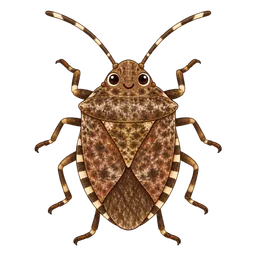
Often confused with
Sources
Not sure this is your bug? Try the Bug Identifier or ask your local Cooperative Extension office.