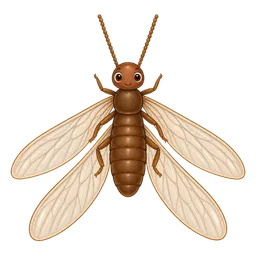
Subterranean Termites
Reticulitermes flavipes (eastern subterranean termite); also Coptotermes formosanus (Formosan subterranean termite) · Termites & Wood/Paper Pests
Subterranean termites live in large underground colonies and reach wood in homes through mud tubes, eating it from the inside where the damage can go unnoticed for years. Most homeowners first notice them when swarms of winged termites pop out indoors near windows and doors. They do not harm people but can cause serious structural damage.
Look for: Swarmers are small dark-brown to black insects with straight beaded antennae, a thick waist and four equal-length wings that break off easily; workers are soft and creamy white.
Quick facts
| Size | 6-13 mm |
|---|---|
| Legs | 6 |
| Usual colors | black, tan |
| Where in the home | Living Room, Garden |
| Active | All year |
| Peak | Feb, Mar, Apr, May, Jun, Jul, Aug |
| U.S. range | The eastern subterranean termite is the most common termite species across North America; the Formosan subterranean termite is an invasive species in parts of the southern U.S. |
| Bites or stings people | No |
Seasons are typical across much of the U.S. and vary by region.
Peak season Active Typical across much of the U.S.; varies by region.
Often confused with
Sources
Not sure this is your bug? Try the Bug Identifier or ask your local Cooperative Extension office.